Hormozgan Steel Successfully Localizes Vertical Scale Pit Pump
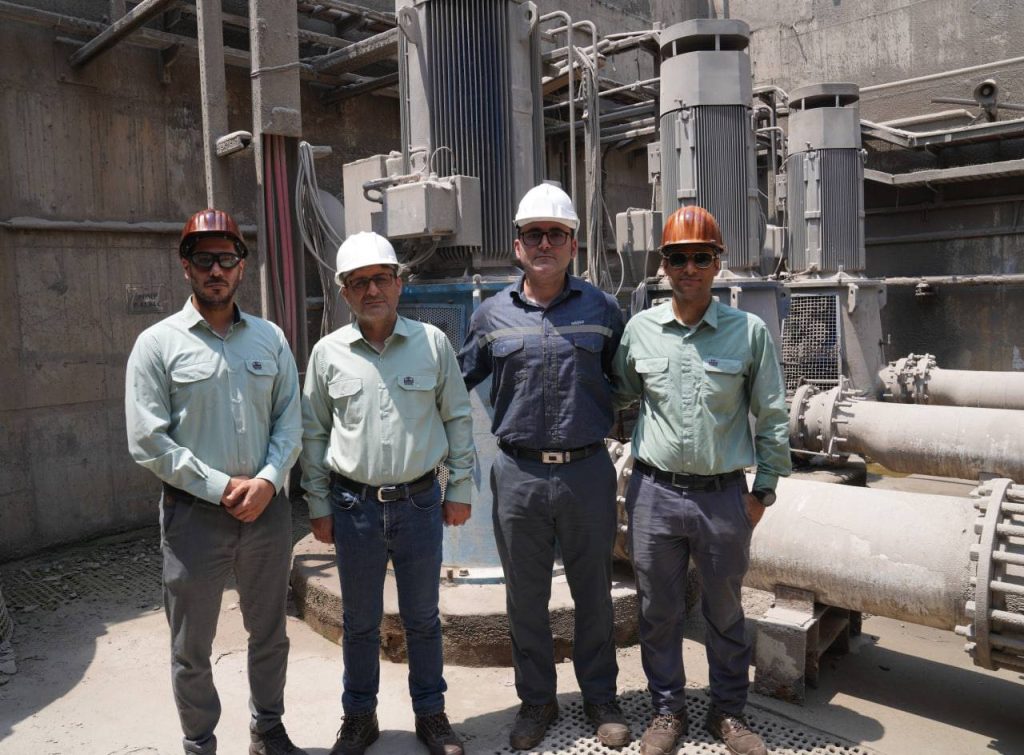
Hormozgan Steel Company has successfully completed the localization of the vertical scale pit pump used in its casting unit. The project was carried out by Iranian engineers with the aim of securing the domestic supply of strategic equipment, reducing dependence on foreign imports, and advancing local technical expertise.
The localization project for the vertical scale pit pump at Hormozgan Steel’s casting unit was completed through the efforts of the company’s Localization Unit and the Technical Office and Maintenance Planning Department, both operating under the Technical Services and Support Division of the Deputy for Operations. The project was executed by Iranian engineers to maximize domestic sourcing of required components, reduce reliance on foreign suppliers, expand technical know-how, and strengthen confidence in local manufacturing capabilities.
Morteza Khadivar, Manager of Technical Services and Support at Hormozgan Steel Company, said that as the supply of strategic equipment for the steel industry faces restrictions due to sanctions, rising foreign exchange costs, and longer procurement times, reliance on domestic technical expertise and the capabilities of Iranian manufacturers has become more important than ever.
He added that the localization of the vertical scale pit pump, completed through the expertise of the company’s specialists in cooperation with domestic manufacturers, represents one of the company’s flagship strategic equipment localization projects and marks an important step toward self-sufficiency, technological development, and greater production stability.
Khadivar emphasized that the project involved far more than manufacturing a single piece of equipment. It encompassed a comprehensive process of reverse engineering, design, analysis, material selection, manufacturing, quality control, and technology transfer, while also establishing the foundation for producing similar equipment in the future.
Localization Achieved Through Cross-Department Collaboration
Khadivar said the successful localization of the vertical scale pit pump was the result of effective cooperation between various departments within Hormozgan Steel and a domestic manufacturer.
He explained that the Localization Unit and the Technical Office and Maintenance Planning Department, under the Technical Services and Support Division, worked closely with the Casting Maintenance Department by continuously sharing technical information, operational experience, participating in technical evaluations, supervising implementation, and supporting the installation and commissioning of the equipment.
The Manager of Technical Services and Support also highlighted the contribution of the Central Workshop, noting that it provided the complete pump assembly, enabling comprehensive data collection, precise measurements, technical documentation, and the execution of the reverse engineering process. Without this cooperation, he said, preparing engineering models, manufacturing drawings, and technical documentation with such precision and quality would not have been possible.
He concluded that the collaboration among these departments, together with the efforts of the company’s specialists, engineers, and the domestic manufacturer, played a vital role in the successful implementation of the project and in achieving the goals of localization, technical knowledge development, and greater self-sufficiency in supplying strategic equipment.
Importance of the Vertical Scale Pit Pump in the Casting Process
Ehsan Karimizadeh, Head of the Technical Office and Maintenance Planning Department at Hormozgan Steel Company, said the vertical scale pit pump is one of the key components of the cooling and water circulation system in the continuous casting unit. Its function is to transfer water containing iron oxide particles (scale), sludge, and other abrasive materials from the scale pit to the water treatment and recycling system.
According to him, the equipment operates continuously under harsh conditions, and its reliable performance is essential for maintaining production stability, preventing pit overflows, preserving cooling system efficiency, and avoiding unplanned production stoppages. As a result, the pump’s reliability and operational readiness are of critical importance.
Need for the Project
Karimizadeh described the vertical scale pit pump as one of the strategic pieces of equipment in the casting unit and noted that any failure or shutdown of the pump could disrupt the collection and transfer of scale-laden water, affecting production continuity.
He added that acquiring the technical expertise to design, manufacture, and supply components for this equipment not only reduces dependence on foreign suppliers and saves foreign currency but also improves production line reliability, shortens maintenance downtime, and strengthens the company’s ability to respond during emergencies.
Reverse Engineering Beyond Equipment Manufacturing
The Head of the Technical Office and Maintenance Planning Department stressed that the objective of the project was not simply to reproduce existing parts. Instead, the equipment’s performance was thoroughly studied, and all components were analyzed from hydraulic, mechanical, and operational perspectives.
He explained that after precise measurements, three-dimensional modeling, preparation of manufacturing drawings, functional analysis, and material selection, the project’s engineering documentation was completed before manufacturing began.
Karimizadeh added that redesigning certain components to better match domestic manufacturing capabilities—without affecting the equipment’s performance—was another significant achievement of the project.
Technical Complexities
Karimizadeh said the vertical scale pit pump is considered one of the steel industry’s most complex rotating machines due to its large dimensions, demanding operating conditions, and strict performance requirements.
The pump has a capacity of approximately 1,205 cubic meters per hour, a 45-meter head, and a 220-kilowatt motor, operating continuously to transfer fluid containing highly abrasive particles. These conditions make its design and manufacturing particularly challenging.
One of the project’s greatest challenges was constructing a vertical assembly exceeding 10 meters in length. In such a structure, power is transmitted from the motor to the impeller through a long, multi-section shaft, requiring extremely precise control of shaft alignment, dynamic balancing, machining tolerances, and assembly quality.
Even the slightest misalignment could increase vibration, bend the shaft, reduce hydraulic efficiency, accelerate bearing wear, and ultimately result in production stoppages. In addition, the design of the impeller assembly, bowl assembly, intermediate bearings, bushings, operational clearances, and sealing system represented some of the most technically demanding aspects of the project.
Material Selection: The Key to Equipment Durability
Karimizadeh noted that the pump’s operating conditions made material selection one of the most critical stages of the project.
Because the pump continuously handles water mixed with scale, abrasive particles, and sludge, its components are exposed to severe wear, corrosion, and mechanical stress. As a result, wear-resistant and corrosion-resistant alloys were used for the components, while stainless steel was selected for the shafts, impeller, and pump bowl to ensure the required mechanical strength as well as resistance to corrosion, fatigue, and abrasion.
Quality Control Ensures Reliable Performance
Hadi Rahnama, Localization Engineering Specialist for Parts and Equipment at Hormozgan Steel Company, emphasized that due to the equipment’s critical nature, quality control was carried out with exceptional precision throughout the manufacturing process.
He said the key quality assurance measures included precise dimensional inspections, non-destructive testing (NDT), raw material quality verification, precision machining in accordance with design tolerances, shaft and rotating assembly alignment inspections, dynamic balancing, in-process inspections, and final performance testing before commissioning.
According to Rahnama, these measures ensured the equipment’s stable performance and operational reliability under actual service conditions.
Project Achievements
Rahnama stated that the successful implementation of the project delivered numerous benefits for the company, including a significant reduction in foreign currency outflows, reduced dependence on foreign suppliers, shorter equipment and spare parts procurement times, faster maintenance response, enhanced capabilities of domestic manufacturers, expansion of reverse engineering and rotating equipment design expertise, improved reliability of strategic equipment, reduced risk of production line shutdowns, creation of the infrastructure required for localizing similar equipment, and the continuation of a successful model of cooperation between engineering expertise and industry.
He added that the localization of the vertical scale pit pump serves as a successful example of effective collaboration among the company’s specialists, engineering departments, domestic manufacturers, and specialized national organizations. The outcome, he said, was not merely the construction of a single piece of equipment but also the development of technical expertise, valuable engineering experience, and expanded domestic manufacturing capabilities for advanced steel industry equipment.
Concluding his remarks, Rahnama said the project demonstrated that with careful planning, sound engineering management, support for domestic manufacturers, and reliance on the expertise of Iranian specialists, even the most complex strategic industrial equipment can be designed and manufactured domestically with competitive quality.