The Market Awaits the Glow of the Furnaces
How Mobarakeh Steel's Return to Production Transcended an Industrial Decision and Became a Tool to Tame Steel Market Volatility?
The supply and demand market for steel is sometimes inflamed by the fear of shortage long before an actual deficit occurs. It takes only one major manufacturer going off-grid for concerns over reduced supply to alter buyer behavior, exert upward pressure on prices, and create a chain of anticipation and excitement. Under such circumstances, production is no longer merely the issue of a single plant. Every ton of product that fails to be manufactured can manifest as a concern somewhere in the market; and every line that returns to operation can quell a portion of this anxiety. The experience of Mobarakeh Steel in the year 1404 (2025/2026) can be read from this precise angle—where the restoration of production, alongside the reconstruction of damaged lines, became a central theme in maintaining market equilibrium.
“The Huge Void of the Largest Producer in the Market”
Following the attacks of Farvardin (March/April) this year on Mobarakeh Steel, the issue was not merely repairing damaged equipment. The steel sheet market faced a sudden shock. Prices surged rapidly in the initial days, and downstream industries were confronted with intense anxiety regarding the future of supply. In such an atmosphere, imports could have served as an immediate fix; however, a different decision was placed on the agenda: bringing usable capacities back into the production cycle as rapidly as possible. This decision followed a simple logic: if part of the market turbulence stems from fear of supply shortage, one of the most effective answers is restoring supply to the market. Consequently, rebuilding the plant ceased to be merely a technical project; part of it transformed into an economic mission.
“Production: The Language to Calm the Market”
The market does not react to promises of production; it reacts to actual physical supply. Thus, activating undamaged lines was not simply a corporate decision to safeguard revenue. This action signaled to the market that the supply chain was not going to remain severed indefinitely. Merely two weeks after the attacks, the decision was made to operationalize the undamaged lines; concurrently, the raw material supply chain was redesigned through alternative routes. Pellets from Sangan, direct reduced iron (sponge iron) from complexes in Gol-Gohar, Sirjan, and Bafq, and steel ingots/slabs from Khuzestan entered this chain so that steel sheet could return to the production circuit of this giant industrial complex. This redesign carried a clear message: to preserve the market, previous links do not need to function in the exact same manner as before; it is sufficient for the chain to flow once again.
“Managing the Market Without Price Controls”
When speaking of market control, minds typically turn toward pricing, directives, and regulations. However, in industrial markets, supply itself is one of the most vital regulatory instruments. If supply is adequate, the pressure of scarcity diminishes. If supply is disrupted, even before an actual deficit forms, the expectation of shortage can alter market behavior. This exact phenomenon was observable in the steel sheet market. In Farvardin 1405 (March/April 2026), the stoppage of Mobarakeh Steel’s supply caused the supply of various steel sheets on the Mercantile Exchange to plunge by approximately 93% compared to Esfand 1404 (February/March 2026). With the company’s return, supply in Ordibehesht (April/May) increased more than sevenfold, reaching close to 420,000 tons. These figures reveal a crucial reality: in a market where a single manufacturer holds a massive share of supply, the continuity of its production is inherently part of the market’s balancing mechanism.
“An Industrial Decision, a Chain Reaction”
The significance of this issue grows when we stop viewing steel sheet as merely a steel product. Sheet metal enters numerous industrial value chains—from automotive and household appliances to industrial equipment and construction. Therefore, a reduction in its supply can transmit its impact to sectors that have no direct physical presence in the steel plant. For this reason, maintaining market share for a major producer is not merely a commercial objective; it can mean safeguarding the flow of raw materials for dozens and hundreds of downstream units. It is at this critical juncture that the boundary between corporate performance and market behavior narrows. When Mobarakeh Steel produces, it does not merely preserve its own revenue; a vital portion of the consumption chain continues its operation and existence.
“Return to Production as an Import Alternative”
In the early days of the crisis, compensating for potential shortages via imports was considered one of the options for market management. However, the core strategy was anchored on utilizing domestic capacity and swiftly bringing production lines back online. This decision holds weight from another perspective: imports can plug a supply gap, but they rely on time, foreign currency, logistics, and international routes. Restoring domestic production, where feasible, keeps the existing domestic economic flow active in addition to supplying the product. In this way, rebuilding a factory can simultaneously become the reconstruction of a long-term economic relationship—a bond between the manufacturer, the market, and downstream industries.
“Market Response to Signals”
The market does not react solely to what has already occurred; it acts on what it anticipates will happen. If market participants perceive that future supply will decline, they may buy prematurely before an actual shortage manifests. This very behavior can spike demand pressure and itself become a driver of price increases. Hence, one of the most critical functions of restoring production is reducing this uncertainty. When lines are reactivated, supply chains are redesigned, and products reach the market once more, a portion of the future ambiguity clears up. At this moment, production is not just a quantitative figure; it is a message. A message that supply persists.
“Forging New Market Policy Through Reconstruction”
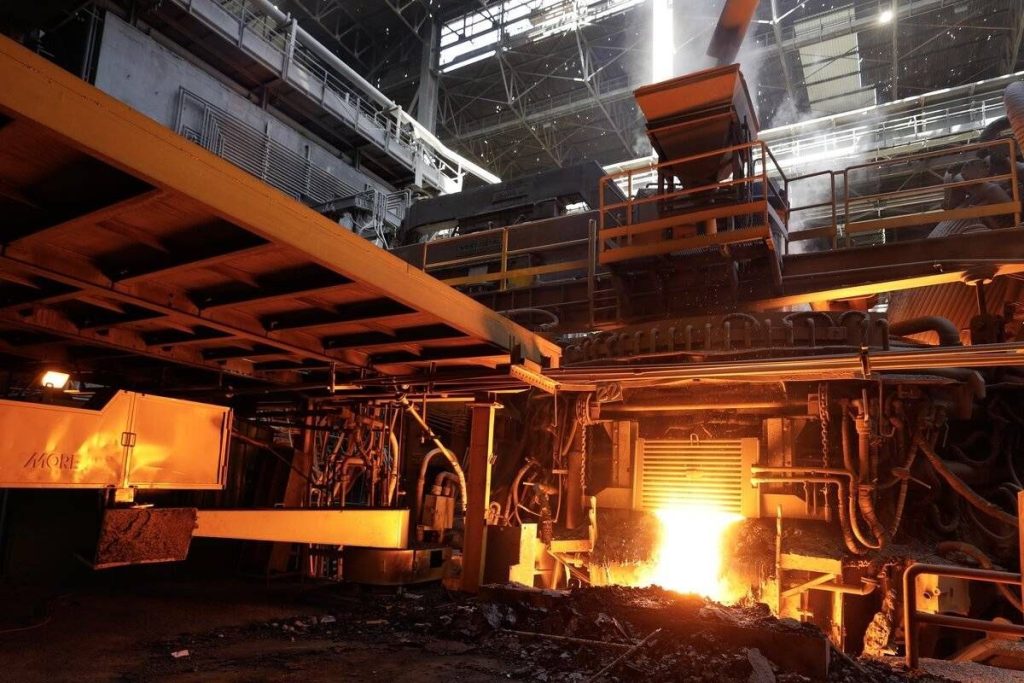
From this perspective, the decision to rapidly reconstruct Mobarakeh Steel cannot be classified merely as an engineering project. Furnace No. 8 returned to the circuit within 45 days; yet the value of this recovery is not summarized solely in reviving a production unit. Every unit that returns faster restores a portion of supply capacity to the market and relieves existing pressure on the chain. For this reason, reconstruction in this experience acquired three layers: rebuilding the plant, rebuilding production capacity, and rebuilding market confidence. These three are interwoven like warp and weft, inseparable from one another.
“Is Price the Sole Determinant of Market Power?”
Perhaps the most significant insight from this experience is that a large economic enterprise—an industrial titan such as Mobarakeh Steel—does not necessarily have to set prices to influence the market. Sometimes, it is sufficient to produce at the right time, sustain supply, and prevent a temporary shock from hardening into a persistent shortage. This form of influence is of a different nature: power derived from capacity and continuity. In this narrative, Mobarakeh Steel is not a formal market regulator, but rather one of the primary actors sustaining its equilibrium—a role player whose production decisions carry impact far beyond the factory gates.
“The Market’s Ultimate Answer to a Problem”
In days of crisis, the market may become filled with rumors, expectations, fear, and emotional volatility. Ultimately, however, what can calm these waves is the return of reality—a product that is manufactured once more and reaches the consumer’s hands. In the year 1405 (2026), Mobarakeh Steel sought to restore this very reality to the market by bringing undamaged lines back online, redesigning its supply chain, and accelerating reconstruction: production in the steel capital of Iran continues. And perhaps the deeper meaning of market control is precisely this: not dictating terms to the market by command, but remaining so deeply embedded in the chain that when crisis disrupts market order, your return can rebuild a portion of that order. Sometimes, more than any other policy, the market is simply waiting for the furnaces to glow again.