Türkiye’s Earthquake Materials Boom Shifts Gear: From Mass Housing to Infrastructure
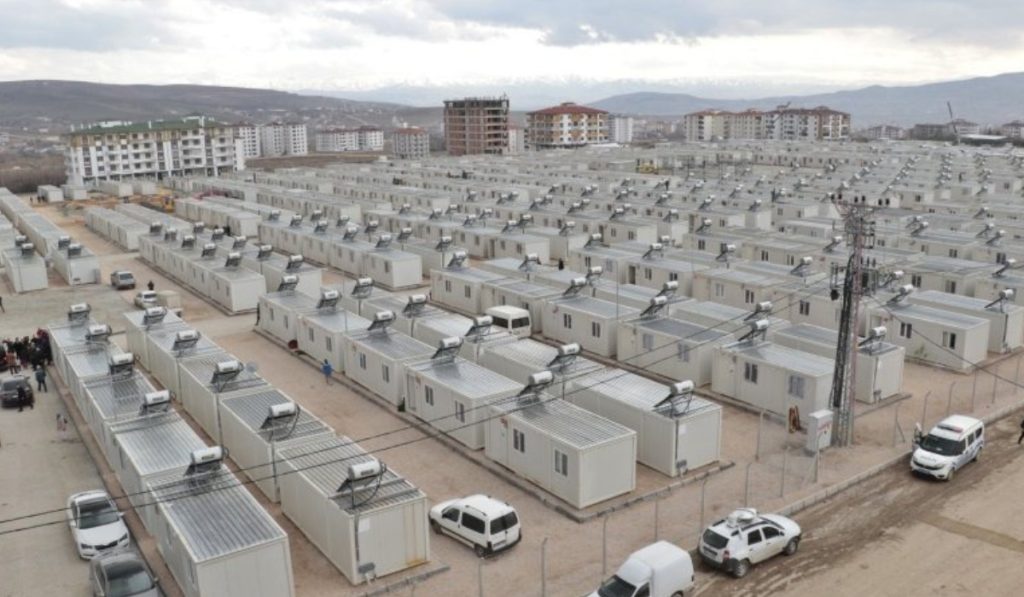
Record cement volumes in 2025 and still-rising steel consumption in early 2026 show that Türkiye’s post-earthquake construction demand has not disappeared.
However, the late stage of the state-led permanent-housing programme, weaker building output, softer long-steel signals, and a widening regional split suggest the market is moving from an extraordinary reconstruction surge toward a more selective mix of infrastructure, urban renewal, and export-supported demand.
A Transition Phase, Not the End
Three years after the February 2023 earthquakes triggered one of the largest construction programmes in modern Turkish history, the demand story for cement, reinforcing steel, aggregates, and other building materials is changing.
The most accurate description in mid-2026 is not that reconstruction has “ended,” but that the state-led permanent-housing wave has moved into a late-stage transition, while infrastructure, rural housing, repairs, and urban regeneration continue. Türkiye’s Presidency of Strategy and Budget (SBB) noted in its February 2026 report that lotteries or allocations had been completed for 433,667 homes and 21,690 workplaces. While the broader recovery process is “largely completed,” the SBB repeatedly lists projects and expenditures extending through 2026 and, in some cases, 2027.
The scale of what preceded this transition was extraordinary. The SBB notes that TRY3.6 trillion (roughly $91.5 billion) was spent from central-government resources on recovery and disaster-risk reduction from 2023 to 2025. This translated into several years of unusually concentrated demand for heavy building materials across the affected southern and southeastern provinces.
What is changing in 2026 is the composition and geography of that demand.
However, the late stage of the state-led permanent-housing programme, weaker building output, softer long-steel signals, and a widening regional split suggest the market is moving from an extraordinary reconstruction surge toward a more selective mix of infrastructure, urban renewal, and export-supported demand.
A Transition Phase, Not the End
Three years after the February 2023 earthquakes triggered one of the largest construction programmes in modern Turkish history, the demand story for cement, reinforcing steel, aggregates, and other building materials is changing.
The most accurate description in mid-2026 is not that reconstruction has “ended,” but that the state-led permanent-housing wave has moved into a late-stage transition, while infrastructure, rural housing, repairs, and urban regeneration continue. Türkiye’s Presidency of Strategy and Budget (SBB) noted in its February 2026 report that lotteries or allocations had been completed for 433,667 homes and 21,690 workplaces. While the broader recovery process is “largely completed,” the SBB repeatedly lists projects and expenditures extending through 2026 and, in some cases, 2027.
The scale of what preceded this transition was extraordinary. The SBB notes that TRY3.6 trillion (roughly $91.5 billion) was spent from central-government resources on recovery and disaster-risk reduction from 2023 to 2025. This translated into several years of unusually concentrated demand for heavy building materials across the affected southern and southeastern provinces.
What is changing in 2026 is the composition and geography of that demand.
Buildings vs. Infrastructure
Türkiye’s construction production index illustrates this shift. While construction output was 7.5% higher year-on-year in December 2025, by June 2026, total construction production had fallen 6.0% compared to a year earlier, according to TÜİK. Within that June result, building construction fell by about 7.5%, while the construction of non-building structures—the category most closely associated with civil engineering and infrastructure—rose about 4.5%.
This is the exact pattern expected as an exceptional housing-construction programme matures: less incremental demand from the mass erection of apartment blocks, but a longer tail of roads, utilities, hospitals, and municipal works.
Cement: A Record Year Conceals Regional Splits
The strongest evidence against declaring the reconstruction boom “over” is cement itself. TÜRKÇİMENTO reported that Turkish cement production increased 10.5% in 2025, domestic sales rose 9.7%, and cement exports increased 15.5%.
Yet, the same data contains the beginnings of the next phase. Domestic cement sales actually declined in the Marmara and Aegean regions in 2025, meaning the national record was not uniform. Akçansa, whose ready-mixed concrete network is concentrated in western and northern Türkiye, saw domestic cement and clinker sales fall 3.5%, even as its exports climbed 20.3%.
This geographic divergence confirms that reconstruction and public investment heavily supported demand outside the western core markets, creating an uneven landscape for producers.
Steel Demand: A Cautious Signal from Rebar
The steel picture is more complicated because Türkiye’s headline finished-steel consumption includes both construction-oriented long products (rebar) and flat steel consumed by manufacturing.
At the national level, growth continued into the first half of 2026, with crude-steel production rising 8.1% to 19.8 million tonnes. However, long products have already shown episodes of weakness. In late 2025, TÇÜD reported that long-product consumption dropped 8.9%, specifically noting that strong housing sales were not translating into rebar demand because a large share of property transactions involved existing, second-hand homes.
The logical reading is that reinforcing steel is moving into a more mixed phase. Remaining earthquake projects, civil infrastructure, and urban renewal continue to create substantial requirements for rebar, but the extraordinary concentration of demand associated with hundreds of thousands of simultaneously constructed permanent homes is fading.
Overcapacity, Imports, and Carbon Costs
The biggest risk for Türkiye’s construction-material producers is that demand normalizes while installed capacity remains designed for much larger volumes.
In 2025, Türkiye’s 93.7 million tonnes of record cement production utilized only about 63% of its nominal capacity. Similarly, crude-steel capacity utilization hovered at 61.6%. Both sectors enter this post-boom phase heavily reliant on exports.
This export dependence introduces a new structural constraint. The European Union’s Carbon Border Adjustment Mechanism (CBAM) entered its definitive phase on January 1, 2026. For Turkish cement and steel producers seeking to redirect excess capacity toward Europe, carbon intensity and verifiable emissions data are now critical commercial hurdles, not just environmental metrics.
Simultaneously, the Turkish steel industry faces shrinking EU sales (down 22% in H1 2026) and persistent import penetration from Asian suppliers, heavily squeezing domestic mills.
The Next Leg of Demand
The government has allocated TRY653 billion in the 2026 budget for disaster-risk reduction and resilient cities, signaling a massive continuing fiscal commitment. From the electrification of the Divriği–İskenderun rail freight corridor to TRY106 billion in water and sewer projects, the infrastructure pipeline remains robust.
For Türkiye’s industrial companies, the next test is not how to supply an emergency boom. It is how to manage the transition to a more conventional economy without allowing excess capacity, cheap imports, carbon compliance costs, and regional demand mismatches to erode profitability.
Türkiye’s construction production index illustrates this shift. While construction output was 7.5% higher year-on-year in December 2025, by June 2026, total construction production had fallen 6.0% compared to a year earlier, according to TÜİK. Within that June result, building construction fell by about 7.5%, while the construction of non-building structures—the category most closely associated with civil engineering and infrastructure—rose about 4.5%.
This is the exact pattern expected as an exceptional housing-construction programme matures: less incremental demand from the mass erection of apartment blocks, but a longer tail of roads, utilities, hospitals, and municipal works.
Cement: A Record Year Conceals Regional Splits
The strongest evidence against declaring the reconstruction boom “over” is cement itself. TÜRKÇİMENTO reported that Turkish cement production increased 10.5% in 2025, domestic sales rose 9.7%, and cement exports increased 15.5%.
Yet, the same data contains the beginnings of the next phase. Domestic cement sales actually declined in the Marmara and Aegean regions in 2025, meaning the national record was not uniform. Akçansa, whose ready-mixed concrete network is concentrated in western and northern Türkiye, saw domestic cement and clinker sales fall 3.5%, even as its exports climbed 20.3%.
This geographic divergence confirms that reconstruction and public investment heavily supported demand outside the western core markets, creating an uneven landscape for producers.
Steel Demand: A Cautious Signal from Rebar
The steel picture is more complicated because Türkiye’s headline finished-steel consumption includes both construction-oriented long products (rebar) and flat steel consumed by manufacturing.
At the national level, growth continued into the first half of 2026, with crude-steel production rising 8.1% to 19.8 million tonnes. However, long products have already shown episodes of weakness. In late 2025, TÇÜD reported that long-product consumption dropped 8.9%, specifically noting that strong housing sales were not translating into rebar demand because a large share of property transactions involved existing, second-hand homes.
The logical reading is that reinforcing steel is moving into a more mixed phase. Remaining earthquake projects, civil infrastructure, and urban renewal continue to create substantial requirements for rebar, but the extraordinary concentration of demand associated with hundreds of thousands of simultaneously constructed permanent homes is fading.
Overcapacity, Imports, and Carbon Costs
The biggest risk for Türkiye’s construction-material producers is that demand normalizes while installed capacity remains designed for much larger volumes.
In 2025, Türkiye’s 93.7 million tonnes of record cement production utilized only about 63% of its nominal capacity. Similarly, crude-steel capacity utilization hovered at 61.6%. Both sectors enter this post-boom phase heavily reliant on exports.
This export dependence introduces a new structural constraint. The European Union’s Carbon Border Adjustment Mechanism (CBAM) entered its definitive phase on January 1, 2026. For Turkish cement and steel producers seeking to redirect excess capacity toward Europe, carbon intensity and verifiable emissions data are now critical commercial hurdles, not just environmental metrics.
Simultaneously, the Turkish steel industry faces shrinking EU sales (down 22% in H1 2026) and persistent import penetration from Asian suppliers, heavily squeezing domestic mills.
The Next Leg of Demand
The government has allocated TRY653 billion in the 2026 budget for disaster-risk reduction and resilient cities, signaling a massive continuing fiscal commitment. From the electrification of the Divriği–İskenderun rail freight corridor to TRY106 billion in water and sewer projects, the infrastructure pipeline remains robust.
For Türkiye’s industrial companies, the next test is not how to supply an emergency boom. It is how to manage the transition to a more conventional economy without allowing excess capacity, cheap imports, carbon compliance costs, and regional demand mismatches to erode profitability.
By AmirSam Ghadessi