Eti Bakır Plans $220M Mazıdağı Expansion for Cobalt Salts and Pellet Iron
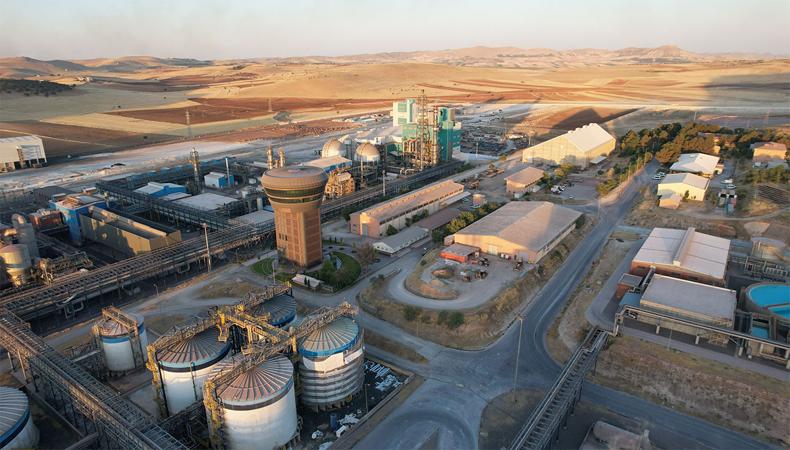
The Cengiz Holding subsidiary will invest $20 million in downstream cobalt-salt production and $200 million in a pellet-iron facility at its operating metal-recovery and fertilizer complex in Mardin. The projects remain at the planning stage, with cobalt-plant construction targeted to begin by the end of 2026.
A Two-Pronged Investment Strategy
Eti Bakır is preparing a combined $220 million investment at its Mazıdağı Metal Recovery and Integrated Fertiliser Facilities in Mardin province. Announced in May 2026, the capital injection comprises a $20 million plant to produce higher-value cobalt salts and a $200 million plant designed to convert recovered iron concentrate into pelletised iron feedstock.
The distinction in the $220 million figure is critical: it represents the combined value of two simultaneously planned projects, rather than the cost of a single “pyrite-to-cobalt” plant. Furthermore, Mazıdağı is an established industrial complex, not a greenfield site. The original plant entered operation in 2018 following a $1.2 billion investment, utilizing a process that combines pyrite processing, hydrometallurgical metal recovery, and fertilizer production.
Moving Downstream: Cobalt Salts
According to Eti Bakır, the new cobalt facility will take material currently recovered in the existing flowsheet and process it further downstream into high-purity cobalt salts. Plant manager Bekir Kan stated that construction is targeted to begin at the end of 2026, with the facility expected to enter service in approximately two years.
The company plans annual production equivalent to 2,000 tonnes of contained cobalt metal. Eti Bakır identified cobalt acetate and cobalt nitrate among the intended products. Almost all this new output is earmarked for export, targeting sectors such as battery manufacturing, ceramics, and defense applications. Previously, cobalt produced at Mazıdağı was sent to Cengiz Holding’s ICoNiChem operation in the UK for conversion; this $20 million project effectively moves that downstream processing step to Türkiye.
The $200 Million Iron Pellet Project
The larger portion of the expansion is the planned $200 million iron project. Mazıdağı currently recovers about 350,000 tonnes per year of iron concentrate from its pyrite-processing stream. Eti Bakır plans to process this raw material stream one step further into what the company calls “pellet iron” with 95% purity.
Occupying roughly 150,000 square meters, the iron facility will take approximately three years to complete, with output aimed entirely at the domestic Turkish steel market. It is important to note that the 350,000-tonne figure describes the input stream of iron concentrate to be processed, rather than the final tonnage of finished pellets or pig iron, despite varying interpretations in secondary local media.
Pyrite Processing and Economic Impact
The expansion builds upon Mazıdağı’s established cycle. The pyrite used at the complex originates as a by-product of copper flotation from Eti Bakır’s Küre operation. This pyrite is roasted to feed the site’s sulphuric-acid and fertilizer plants, while the resulting calcine is leached to separate cobalt, zinc, and copper. Cobalt recovery, acid production, and fertilizer manufacturing are already functioning components of the complex; they are not new additions under the $220 million package.
From an economic perspective, Eti Bakır presents the expansion as a major import-substitution and value-addition program. By finishing more of its recovered cobalt and iron streams domestically, the company aims to deepen Türkiye’s industrial supply chain.
The twin investments are also expected to generate regional employment, raising the Mazıdağı workforce from 1,690 to 1,900 personnel, with 60 of those new positions specifically attributed to the cobalt-salts project.
AmirSam Ghadesi