IMPASCO’s Important Step in Rare Element Exploration; Study of Apatite Mineral Chemistry in Central Iran
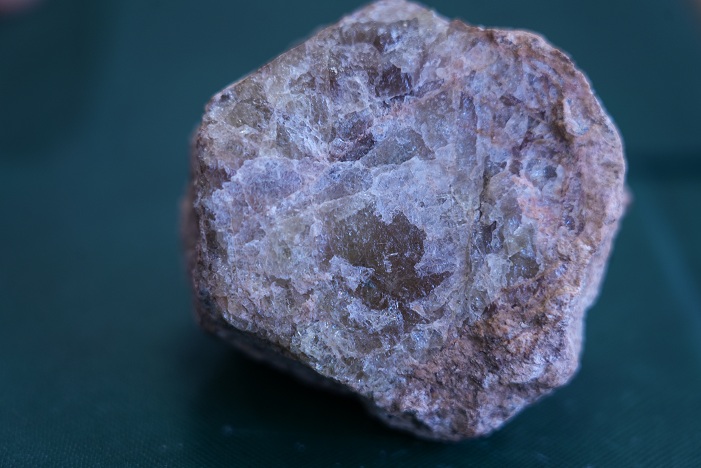
IMPASCO researchers, by presenting a new genetic model for Bafq iron-apatite deposits, confirmed the structural similarity of these deposits with the strategic "Kiruna" deposits in Sweden.
At the 34th National Crystallography and Mineralogy Conference of Iran, researchers in an article titled “Apatite Mineral Chemistry in Iron-Apatite Deposits of Central Iran; Case Study of the Bafq Mining Region,” examined the genesis and chemical characteristics of apatite in one of the world’s most important metallogenic provinces.
Negin Koorangi, Abdolrahman Rajabi, and Valiollah Ahmadi Khonsaraki in this research studied the iron-apatite (IOA) deposits of the Bafq region from the perspective of apatite mineral chemistry. The Bafq mining region in Central Iran hosts important deposits such as Mishdovan, Esfordi, Choghart, Chadormalu, Chah-Gaz, Gazestan, Seh-Chahoon, and Anomaly XIII A, which in addition to iron, are of high economic importance for phosphorus and rare earth elements.
According to this research, ore-related apatites, compared to host rock apatites, are richer in fluorine and chlorine and have more light rare earth elements (LREE). In contrast, host rock apatites show a relatively higher share of heavy rare earth elements (HREE). Also, ore-related apatites are depleted in trace elements such as cobalt, nickel, copper, zinc, and zirconium.
The findings of this study indicate that apatite mineralization in Bafq IOA deposits includes primary magmatic crystals to strongly hydrothermally altered apatites. These characteristics indicate a magmatic to magmatic-hydrothermal origin for these deposits, during which F-Cl-rich hydrothermal fluids caused metasomatic overprinting on primary apatites.
The researchers also announced that the iron-apatite deposits of the Bafq region bear great similarity to Kiruna-type deposits in northern Sweden, and a new genetic model has been presented for these deposits that includes the simultaneous participation of magmatic and magmatic-hydrothermal processes.
This research was presented as an article at the 34th National Crystallography and Mineralogy Conference of Iran (September 16–18, 2026, Urmia University).