Ilam: A Province Rich in Minerals, Poor in Exploitation
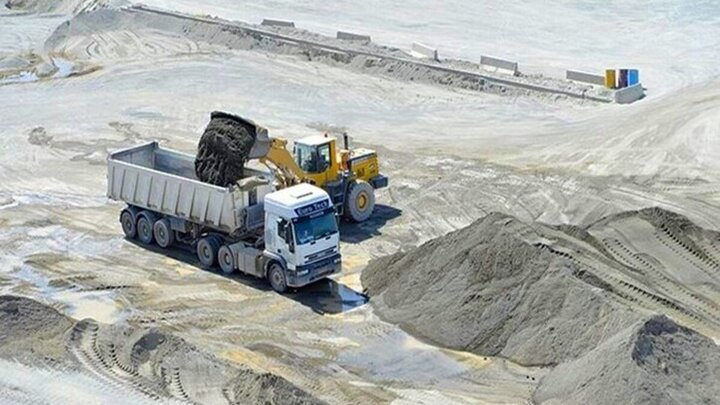
Despite having proven reserves exceeding one billion tons of mineral materials across 15 different types and a strategic border position for export to Iraq, Ilam Province has created only 470 direct jobs in this sector.
Ilam Province, with significant mineral reserves, a privileged border position, and access to Iraqi markets, possesses latent capacities for developing the mining sector. However, these capacities have not in practice led to economic prosperity and sustainable employment, and the majority of the province’s mines remain inactive.
Reserves That Leave Raw
According to official statistics, the reserves of Ilam Province’s mines are estimated at approximately one billion tons, with more than 14 million tons of nominal extraction taking place annually. In Ilam Province, 15 types of mineral materials have been identified, including calcareous alluvium, bitumen, clay, limestone, gypsum, silica sand, shale, calcite, marl, celestite, rock salt, and anhydrite.
Ahmad Karami, Governor of Ilam, referring to the fact that the majority of mines are exploited through raw material sales, said: Attention to processing can bring higher added value, more employment, and significant contribution to the province’s development.
He added: In the Seventh Plan law, 8% economic growth is targeted, 13% of which relates to the mining sector; therefore, we must not neglect this unique capacity.
The Governor of Ilam emphasized the necessity of drafting a comprehensive detailed plan for mines and mining zones by the responsible bodies and said: Investment in this sector must be based on study and with an environmental preservation approach, and mining extraction must be accompanied by alternative programs such as afforestation to prevent nature destruction.
Employment That Does Not Meet Expectations
According to the latest statistics, currently 54 valid exploitation licenses with a nominal extraction capacity of about 9 million tons and employment generation of 470 people are active in the province. Meanwhile, the number of mineral industry licenses in the province is 228, including cement, gypsum, brick, sand and gravel, and asphalt production units.
Ilam Province Mines
Abbas Mirzad, Deputy for Economic Affairs Coordination at Ilam Governorate, referring to the challenges facing the mining sector, said: Geological studies and surveying in the west of the country, especially Ilam Province, have not been sufficiently conducted, and we need more detailed studies, including the preparation of 1:50,000 geological maps in the Zagros region.
He added: Unfortunately, the method of mining extraction in Ilam Province is still based on traditional methods, and we must move toward equipping with modern world technologies.
Local Objectors and Worn-Out Machinery
This official cited among the major problems of the province’s mine operators the existence of local objectors and the worn-out or rented status of mining transport and loading machinery. Operators expect the government to provide support in the form of low-interest facilities for replacing and renewing transport machinery.
Mirzad explained: The main reason for local resistance against mining activities is the lack of public participation in mining projects, and mining activists must, within the framework of social responsibility, have a share in the cultural and infrastructural development of mining areas to gain people’s trust.
Mines That Have Been Locked
Morad Yeganeh, Special Governor of Dehloran, also recently criticized the performance of large state-owned companies, saying: Years ago, state-owned companies entered the province under the pretext of exploration, but after years have taken no operational action. These companies have merely blocked mining areas, preventing private sector investors from entering and operating.
Yeganeh, referring to Dehloran’s mineral capacities, stated: Dehloran County is full of valuable minerals, including celestite, which has high processing capability. The establishment of a celestite processing plant in Dehloran is among the approvals of the presidential visit, and while the required land is ready for transfer, we need special orders to accelerate the executive process.
Looking to the Future
Despite all challenges, Ilam’s mineral capacities can still become the driving engine of the province’s economic development. There are 311 valid establishment permits in the province with physical progress ranging from 10% to 90%, requiring an investment volume of 17 trillion tomans and projected employment of 16,000 people.
Realizing these capacities requires serious determination from provincial and national officials, drafting a comprehensive mining plan, attracting private sector investors, equipping mines with modern technologies, and removing local obstacles.
Otherwise, the wealth sleeping in the heart of Ilam’s mountains will remain unexploited, and the opportunity for job creation and economic prosperity for the people of this province will be lost.