China’s aluminium producers push abroad as domestic growth hits ceiling
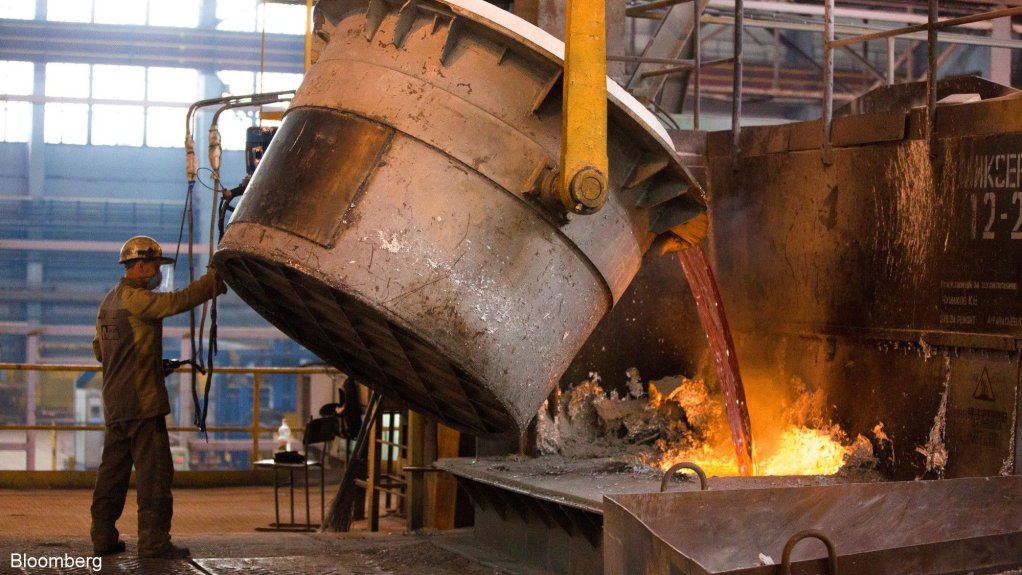
Chinese aluminium producers are pushing abroad as part of an expansion spree that could tip the world market for the metal into surplus even as the wave of investment faces greater scrutiny from Beijing.
At least 15-million metric tons a year of primary aluminium smelting capacity is planned or has been announced by Chinese investors across Southeast Asia, the Middle East, Central Asia and Africa, a Reuters review of company disclosures and government filings showed.
About 2.85-million tons a year of that is ramping up or under construction, the review showed, equal to 3.8% of current global annual capacity of 73.78-million tons.
The new near-term smelter projects, along with recovering Middle East output, will help swing the global aluminium market from a 1.1-million-ton deficit this year to an 830 000-ton surplus next year and a 1.8-million-ton surplus in 2028, Morgan Stanley forecast in July.
Chinese aluminium producers are looking overseas for growth because domestic smelting capacity is capped at 45-million tons a year under a policy introduced in 2017 to curb overcapacity and pollution.
How much of the planned capacity will ultimately be built is unclear, as new supply could lower prices and put projects further down the pipeline at risk. Also, Beijing is increasing its scrutiny of outbound direct investments by Chinese companies and access to power overseas remains an impediment to new plants.
“Ultimately, it comes down to economics. Most of these companies are privately owned and profit-driven,” said Rachel Zhang, head of China materials research at Morgan Stanley. “If a project clearly does not make money, why would they invest in it?”
The expected additions should weigh on metal prices. Morgan Stanley has cut its average price forecast in 2027 to $2 850 a ton and for 2028 to $2 800. It expects aluminium to average $3 150 in the second half of 2026.
Benchmark three-month aluminium prices on the London Metal Exchange were at $3 097.50 a ton as of 03:00 GMT on Wednesday.
Chinese metal demand for manufacturing and electric vehicles that exceeds the domestic capacity cap is driving the overseas expansion as well as the companies’ outlook for rising consumption as much as 20 years ahead, said Andrew Denton, research director at metals industry analytics company AME Group in Sydney.
“These projects would have to be predicated on a much longer-term view of demand growth for primary aluminium, which we see,” he said. “The broader themes for demand with electrification and EVs for aluminium are positive.”
INDONESIA FIRST
Indonesia, which has attracted tens of billions of dollars in Chinese nickel investment, has emerged as a major destination for Chinese aluminium investment.
Zhang at Morgan Stanley expects Indonesia to add 866 000 tons of annual smelting capacity in 2026 and another 1.2-million to 1.3-million tons in 2027.
The projects include Shandong Nanshan Aluminium’s 250 000-ton-a-year facility on the island of Bintan that is under construction, with an expansion that would double capacity planned as well.
In Central Sulawesi’s Morowali Industrial Park, Xinfa Group and Tsingshan Holding Group are commissioning a facility with a capacity of 600 000 tons a year.
Tsingshan is also working on a new facility at the existing smelting hub of Weda Bay in North Maluku province of 800 000 tons a year.
Beyond Indonesia, Chinese projects in Kazakhstan and Saudi Arabia would add around 4-million tons a year of capacity.
In Saudi Arabia, Shandong Innovation Group-backed Red Sea Aluminium is building a 500 000-ton-a-year smelter in Yanbu, targeting production in 2027. The project reached preliminary partnership terms with the kingdom’s Public Investment Fund in January.
In Kazakhstan, Xinfa is pursuing a 2.4-million-ton-a-year smelter in Pavlodar, among the largest projects in the pipeline.
Globally, Morgan Stanley expects around 2.1-million tons of new annual capacity in 2027 and 2.2-million tons in 2028.
SCRUTINY IN BEIJING
Still, global prices and Chinese oversight will decide how much is built.
Overseas aluminium deals face stricter regulatory scrutiny under new outbound investment rules that started in July, according to two sources briefed by some of the Chinese companies that are moving overseas.
The rules allow authorities to review overseas investments on national security grounds and order companies to halt projects or divest assets.
In October, Fan Shunke, the deputy party secretary of the state-backed China Nonferrous Metals Industry Association, said a huge expansion overseas was not desirable nor feasible.
While large integrated projects are still likely to go ahead, though with more delays, the new rules will make it more difficult for smaller stand-alone smelters, according to Alan Clark, Adelaide-based founder of aluminium consultancy CM Group, who has spent more than two decades researching China’s metals industry.
Of the 15-million tons of new capacity identified by Reuters, Clark estimates that only between 9-million and 10-million tons will eventually be built, about half of that in Indonesia.