Tourism Visits to Active Garmsar Salt Mines Banned for Safety Reasons
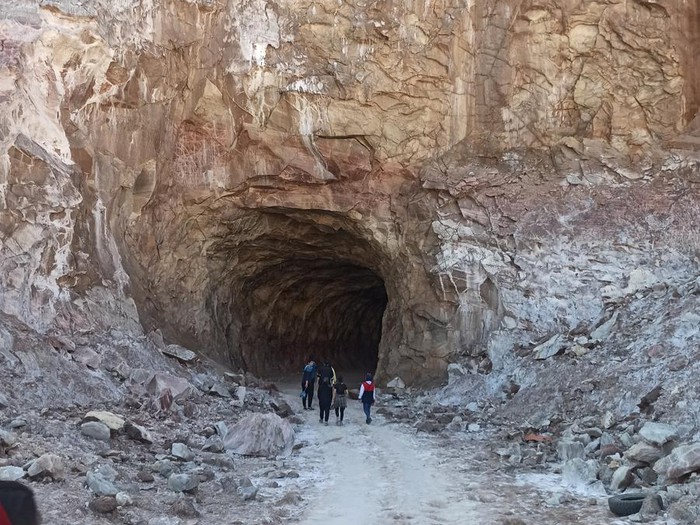
The Head of Garmsar's Cultural Heritage Office, citing the safety hazards of active salt mines, declared tourist visits to these spaces prohibited and emphasized the need to determine the status of abandoned mines and develop health tourism and handicrafts.
Garmsar, due to its significant salt reserves and the activity of mines of this mineral, possesses special capacities for developing geology-based tourism; a capacity that, alongside the region’s natural and historical attractions, can help diversify the county’s tourism products. Salt caves and spaces, provided they have safe conditions and protection regulations, can provide the basis for tourists to become acquainted with the region’s geological features and for the formation of different tourism experiences.
Despite this capacity, tourism in salt mines differs from visiting ordinary natural attractions, and the simultaneous activity of extraction, exploration, and mining operations doubles the necessity of observing safety requirements and legally determining exploitation status.
Therefore, converting active mines into tourist attractions is not possible without providing technical and safety conditions, and planning for tourism use of these spaces must be done with the participation of responsible bodies and operators.
Garmsar’s salt capacity is not limited to visiting mines and caves; health tourism centered on salt therapy and the production of handicrafts from salt stones and products can also be part of this mineral’s value chain. Establishing specialized centers, developing services in accordance with health standards, and supporting handicraft practitioners are among the paths that can create greater added value for the county; a matter whose realization depends on attracting investors, issuing necessary permits, and completing infrastructure.
Tourism Exploitation of Active Mines Not Possible
The Head of Garmsar’s Cultural Heritage, Tourism and Handicrafts Office, on Sunday, referring to the capacity of the county’s salt caves and mines, said: “Salt mines are among Garmsar’s main tourist attractions, but as long as extraction and exploration operations are ongoing in them, changing the use of these mines to tourism spaces is not possible.”
Milad Rezaei, stating that this matter has also been inquired about with the Industry, Mine and Trade Office, added: “According to the response received, exploration, extraction, and even blasting operations are still being carried out in some mines, and the entry of tourists into these spaces can be dangerous.”
Referring to the holding of some tours visiting salt mines without the necessary permits, he emphasized: “Groups from neighboring cities and provinces and even farther areas visit these spaces with direct coordination with mine owners, but these tours are not recognized as authorized by the Cultural Heritage, Tourism and Handicrafts Office, and in the event of an accident, its consequences will fall on the factors involved in holding the visit, including the mine owner and the tour guide.”
Emphasizing the necessity of observing legal and safety requirements, he added: “At a meeting attended by the Governor of Garmsar and the Director General of Cultural Heritage of Semnan Province, it was decided that the Industry, Mine and Trade Office should determine the status of mines that are nearing the end of their extraction period, so that after determining the status of mining activity and observing safety regulations, the possibility of transferring them to the private sector for providing tourism services can be examined.”
An Abandoned Mine on the Path of Tourism Investment
The Head of Garmsar’s Cultural Heritage, Tourism and Handicrafts Office, referring to the capacity of some inactive mines for tourism use, said: “One of the county’s abandoned mines that has the potential to become a tourist attraction was transferred to the private sector in past years and has received preliminary approval.”
He added: “This project is located in the Sardarreh area, and the investor is going through legal procedures to implement the economic plan, but so far no continuous and tangible executive measures indicating the project’s entry into the operational phase have been taken.”
Requirements for Using Mines as Tourist Attractions
Rezaei, referring to the importance of determining the status of mines and providing conditions for their transfer to investors, stated: “Tourism use of these capacities requires going through legal processes and observing safety requirements, and a mine cannot be considered ready for public visits merely because it possesses natural attractions.”
Referring to the health tourism capacity in Garmsar, he said: “Some ecotourism centers and accommodation facilities in the county provide salt therapy services, but activity in this field has not developed in a specialized manner, and this has caused the county’s salt capacity to not be utilized to the extent of its capabilities.”
Salt Therapy; A Capacity Requiring Specialized Investment
Referring to the history of the Salt Research Center’s activity in Garmsar, he added: “In a conversation with the President of Islamic Azad University about the status of this center, it was announced that its concession has been transferred to the private sector and Azad University no longer bears responsibility for this complex; while the activity of such a center could have played a role in developing salt tourism and salt therapy-related services.”
The Head of Garmsar’s Cultural Heritage, Tourism and Handicrafts Office stated: “To develop this sector, an investor has been invited to establish a specialized salt therapy center in the Sardarreh area near the main road. This project is in the stage of issuing preliminary approval, after which the follow-up for land transfer through natural resources and the next stages of project implementation will be pursued.”
Referring to the regulations for activity in the health tourism field, he said: “Tourism investment projects must refer to the Cultural Heritage Office to obtain permits, and sections related to medical services are also subject to the regulations and permits of the responsible bodies in the health and treatment field.”
Supporting Handicrafts Centered on Salt Products
Emphasizing the strengthening of capacity for using salt stones and products in handicrafts, he said: “In the past, permits were issued for activity in this field and a number of practitioners were working in this area, but the outbreak of COVID-19 and the consequences of war caused damages to tourism and handicraft practitioners.”
He added: “Practitioners in this sector are among the groups that face economic damages in the post-war period as well, and supporting them can help revive tourism and handicraft-related activities.”
Rezaei, announcing the Cultural Heritage Office’s readiness to support applicants in this field, stated: “Those interested in activity in the field of ornamental salt stones and production of salt products with the aim of attracting tourists or for use in homes and various complexes can refer to this office for guidance and follow-up on necessary permits.”
From Natural Capacity to Tourism Value Chain
Garmsar’s salt mines, in addition to the economic value of extraction, also have capacities from a tourism perspective whose exploitation requires a clear separation of mining activity from tourism activity. The end of extraction in some mines, assessment of technical and safety conditions, and provision of required infrastructure can provide the basis for examining the transfer of these spaces to tourism investors.
The development of salt tourism is also not limited to visiting mines, and establishing specialized salt therapy centers, strengthening the link between natural attractions and ecotourism accommodations, and expanding handicraft production based on salt products can help form a chain of economic activities in this field. The realization of these capacities in Garmsar depends on coordination among executive bodies, support for investors and local practitioners, and observance of legal, technical, and health requirements.