Simultaneous Pressure of Energy, Raw Materials, and Exchange Rates on the Country’s Production and Industrial Units
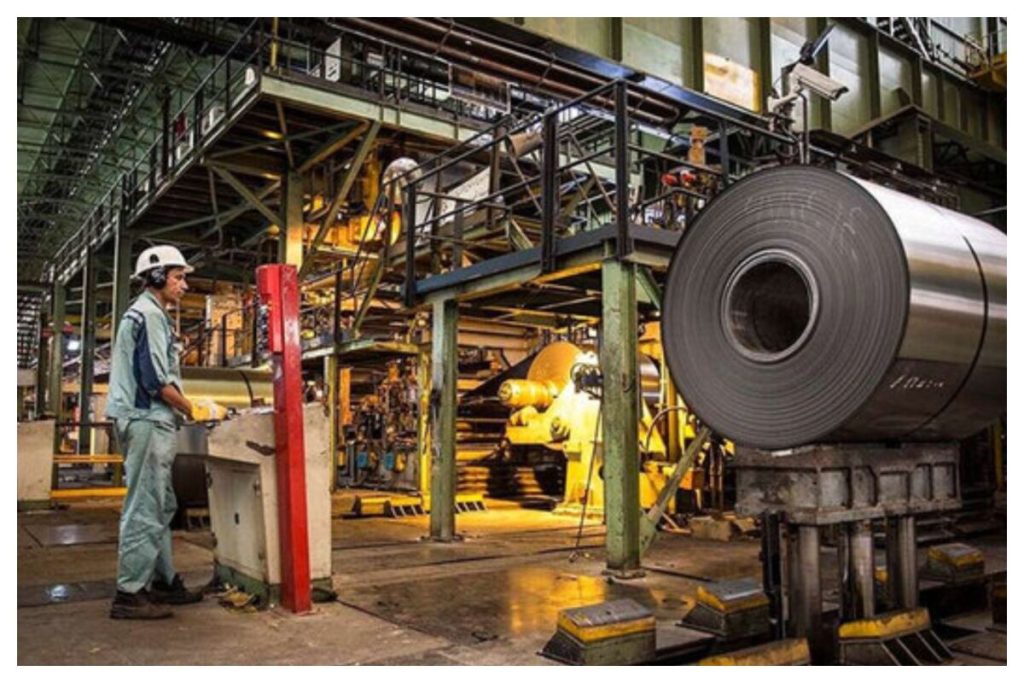
According to the latest report from the Statistical Center of Iran, the point-to-point producer inflation for the industrial sector reached 147.3% in summer 1405 (2026), and the exchange rate growth, rising energy prices, and supply chain disruptions imposed unprecedented pressures on industrial units.
The producer price index for the industrial sector reached 774.7 units in summer 1405, increasing 147.3% compared to last summer. As a result, industrial product prices became approximately 2.5 times higher on average compared to last summer.
However, not all inflation indicators followed the same path. Seasonal industrial inflation decreased from 36.2% in spring to 28% in summer, but point-to-point and annual inflation increased by 38.3 and 26.4 percentage points, respectively.
This difference shows that although the pace of price increases slowed compared to spring, price levels remain elevated compared to last year. According to the latest report from the Statistical Center of Iran, the producer price index for the industrial sector with a base year of 1400 (2021–2022) in summer 1405 presented a picture of continued price pressures in the production chain.
An examination of this index’s components shows that price increases were not equally intense across all industrial activities, and the composition of groups affecting the index played an important role in shaping overall inflation. Therefore, examining price changes in industrial groups and each one’s share in the total index provides a more precise picture of the focal points of price increases this season.
Simultaneous Pressure of Energy and Raw Materials on Industry
Arya Sadegh-Niat Haghighi, Head of the Industry Commission of the Iran Chamber of Commerce, referring to the increased cost pressure on production units, stated: “Raw materials and energy have had the largest share in increasing production costs in recent months. In particular, energy costs have multiplied several times and, alongside rising raw material prices, have imposed significant pressure on industrial enterprises.”
Referring to the factors behind raw material price increases, he said: “Part of this increase is due to logistics and transportation problems. The supply time for raw materials, parts, and intermediate goods, which previously took at most one month, has now reached 2 to 3 months.”
This delay, in addition to increasing transportation costs, also ties up enterprises’ working capital for longer periods. Transportation costs have also more than tripled. The Head of the Industry Commission of the Iran Chamber of Commerce added: “Prolonged supply times, on one hand, increase production costs, and on the other hand, by creating shortages in the raw materials market, provide the ground for further price increases. Alongside these factors, exchange rate increases also directly affect the price of raw materials and equipment.”
Sadegh-Niat Haghighi, stating that transferring increased production costs to final product prices depends on market conditions, added: “In the current situation, the recession does not allow producers to fully compensate for all their increased costs in the sales price. Many production units are not operating at full capacity, and this raises the finished cost of products. When a factory operates at half its capacity, overhead costs are spread over a smaller volume of production, and as a result, the finished cost per unit of product increases.”
Referring to the condition of the durable goods and building materials market, he stated: “Part of the units’ production is not sold and remains in warehouses. The market for products such as tiles and ceramics, as well as durable household appliances including refrigerators and televisions, is facing recession. Given livelihood conditions and rising household costs, these goods are not a purchase priority for many consumers. On the other hand, competition among producers to maintain their share of the limited market has reduced the possibility of proportionate increases in sales prices.”
The Head of the Industry Commission of the Iran Chamber of Commerce also spoke about the outlook for producer inflation in autumn: “It seems the slope of price increases in autumn will be gentler than in summer; because a significant portion of the sharp increases in energy prices, exchange rates, and logistics costs occurred in summer.”
However, this prediction does not mean production problems are resolved. Referring to the energy supply challenge in the coming months, he stated: “Now the industry’s main concern is gas restrictions and, subsequently, electricity restrictions. No specific plan for implementing blackouts has been announced yet, but warnings have been given about the possibility of restrictions.”
Weather conditions and the delay in the onset of cold have so far helped production to some extent, but with falling temperatures, the likelihood of energy restrictions increases. Unfortunately, despite emphasis on the necessity of supplying energy to the production sector, when shortages occur, restrictions are still transferred to industrial units, and producers must pay the cost of this imbalance.
Point Inflation Surpassed Historical Peak
The point-to-point inflation of the industrial sector’s producer price index last summer, compared to this index’s time series from 1390 (2011–2012) onward, is considered the highest recorded level. During this period, industrial point inflation generally fluctuated in the 50–60% range, but this summer’s rate was more than double the ceiling of this range.
This surge began in spring, when point inflation reached 109%, and in summer it increased by 38.3 percentage points. The breadth of price increases was also notable. Even the non-metallic mineral products group, which recorded the lowest point inflation in summer, exceeded the historical range ceiling with an 84% rate. Thus, price increases were not limited to a few activities, and all industrial groups experienced inflation higher than the usual range of past years this season.
Oil Refining; Leader in Seasonal Increase
An examination of industrial groups shows that price increases in summer were not uniform across activities. The group of coke and refined petroleum products, recording 80.2% seasonal inflation, experienced the highest price increase. This figure was 13.1% in spring, and therefore the price growth of this group’s products accelerated significantly between the two seasons. Of course, the importance of this increase was not limited to the oil refining inflation rate. This group, with an importance coefficient of 21.37%, had the highest weight in calculating the total industry index. As a result, price changes in refined products had a significant effect on the final producer index figure. The wood and wood products group also, with 28.5% seasonal inflation, stood slightly above the industry average.
In contrast, the beverages group recorded the lowest price increase with 10.8% seasonal inflation. This rate was 50.4% in spring, and its decline indicated a noticeable moderation in price growth in this group. The food industry also, with 13% seasonal inflation, was among the groups whose price increases were below the industry average. Base metals with 18.2%, motor vehicles with 19.8%, and chemical products with 25.3% were other groups that recorded lower seasonal inflation than the total index.
Deepening Price Gap with Last Year
The increase in industrial product prices in summer was not limited to a few activities. Industrial point inflation reached 147.3% and in some groups exceeded even this. Tobacco products topped the list with 216.8% inflation, and oil refining also recorded an increase of nearly 200%. Rubber and plastic products and wood products were also in this range. Even in the group that experienced the lowest price increase, namely non-metallic mineral products, point inflation reached 84%. These figures indicate an unprecedented summer for industrial product prices.
The point is that the decline in seasonal inflation in summer did not mean falling prices. Price growth slowed compared to spring, but the price gap with last year continued to widen. In fact, the increases that occurred in previous seasons remained at price levels and showed their effect in point and annual rates.
Annual industrial inflation also reached 97.3%, approaching the 100% threshold. Among industrial groups, the food industry had a different situation. The point inflation of this group was slightly lower than in spring but still stood at 137.2%. In contrast, the annual inflation of the food industry reached 114.4%. This difference shows that a limited reduction in price growth in one season does not necessarily mean a change in the direction of prices over a longer period.
Of course, the inflation rate alone does not show which group had the greatest effect on the total index. Oil refining, food industries, base metals, and chemical products together hold more than 66% of the industry index weight. For this reason, price developments in these four groups become more important in the final figure. Oil refining in summer both enjoyed high weight and experienced a sharp seasonal surge; in contrast, base metals, despite their significant share in the index, had lower price increases than the industry average.
Nevertheless, the producer price index only reports changes in product prices at the production stage, and its increase cannot be equated with improved revenue or profitability for factories. Sales prices may have risen, but the cost of raw materials, energy, and other inputs has also increased. For this reason, analyzing the industry’s condition requires examining multiple factors: prices, production, and sales.