Central bank buying, ETF inflows support third-quarter gold demand
The World Gold Council's (WGC’s) 'Gold Demand Trends' report for the third quarter has revealed that total gold demand was 1% lower year-on-year at 1 369 t. The gold price averaged $4 262/oz for the quarter, while the value of demand rose by 22% year-on-year to $188-billion.
Central banks and other official institutions added a net 321 t to reserves in the quarter, up 42% year-on-year and the highest quarterly total since the fourth quarter of 2024, with portfolio diversification and risk management remaining the primary demand drivers.
Year-to-date purchases of 675 t were 6% higher year-on-year.
The report notes that physically backed gold exchange-traded funds (ETFs) returned to inflows during the third quarter in a marked reversal from the second quarter, adding 211 t in the third quarter. This was only 6% below the strong inflows seen in the third quarter of 2025 and holdings rose to a record 4 256 t.
Over-the-counter (OTC) and other demand reached 143 t, up from 101 t a year ago, but below the elevated levels seen earlier this year.
Bar and coin demand dropped by 19% year-on-year to 268 t, falling back as individual investors stayed on the sidelines due to a lack of clear direction on the gold price. China was the clear outlier with demand up 7% year-on-year.
The WGC says high prices continued to dampen jewellery demand, which fell by 17% year-on-year to 313 t, below the levels seen during Covid-19. Consumers continued the trend of switching to lighter and lower-carat pieces. However, the value of global jewellery demand edged higher to $43-billion.
Additionally, the report notes that technology demand rose 3% year-on-year to 85 t, the highest quarterly total since the fourth quarter of 2021.
Electronics demand grew by 5% to 72 t, supported by AI-related manufacturing.
Mine production rose 3% to a third-quarter record of 1 071 t, while recycling fell 8% to 314 t despite higher prices, its lowest level since the fourth quarter of 2023.
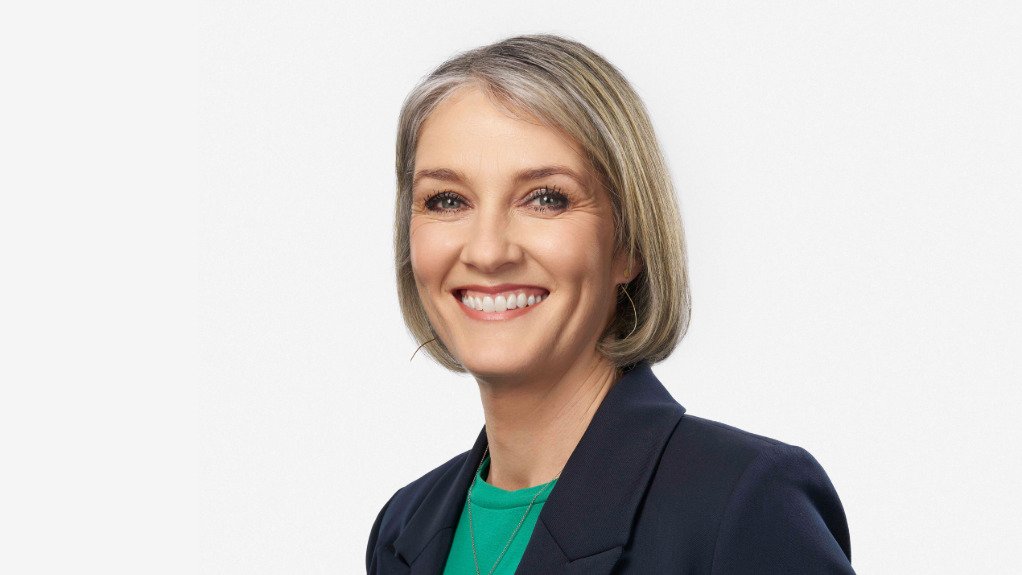
WGC senior markets analyst Louise Street describes the third quarter as a mixed bag for gold demand.
“Gold ETF inflows came roaring back, with geopolitical risk and concerns around fiscal discipline driving institutional interest, in contrast to retail investors who held back amid uncertainty over the gold price outlook. Central banks remained an important pillar of demand as pronounced buying continued from the official sector.
“The outlook for gold looks finely balanced through to the end of the year. While rising interest rates and mixed inflation expectations present potential headwinds, the combined shadows of geopolitical risk and financial market stress may cause participants to seek stability in gold,” she said.
Speaking to Mining Weekly, Street explained that uncertainties in the global economy had impacted on market performance, noting that it had been a factor underpinning investment, particularly in the ETF space.
She explained that geopolitical concerns and inflation, as well as fiscal sustainability concerns, had been factors encouraging ETF flows.
“That being said, we did note that, in the third quarter, the geopolitical risk index sort of subsided somewhat, but if you look at it in historical terms, geopolitical concerns are still elevated, they’re still very near the surface and it doesn’t take much for them to break out and encourage investor flows again.”
Street said she expected central banks and investor flows to continue being major drivers of gold demand going into the fourth quarter.
“We saw a very strong quarter of central bank buying. Our surveys that we run each year and our conversations with central banks suggest that the strategic drivers that are behind that continued wave of buying still remain in place,” said Street.
The report explains that investment should be supported by robust global gold ETF buying and resilient physical investment.
Central banks are likely to remain significant buyers, while elevated prices continue to weigh on jewellery volumes. Mine production could reach another record high, but the overall supply response should remain modest, with recycling still subdued.
The WGC, in the report, says it expects investment demand to remain the principal source of annual demand growth, finishing 2026 about 200 t above 2025.
In the fourth quarter, demand across global gold ETFs, Western bar and coin, derivatives and OTC activity is likely to reflect competing macroeconomic forces: higher policy rates, bond yields and a stronger dollar could weigh on demand, while fiscal concerns, inflation risks, geopolitics and financial market stress may provide support.
It notes that jewellery demand is expected to decline year-on-year, while technology demand is likely to remain broadly stable.
The WGC says it has raised its expectation for full-year central bank demand, which it expects to at least match 2025 following stronger-than-expected third-quarter buying and a modest upward revision to the second quarter.
The WGC says supply is expected to decrease modestly whereby mine production could reach another record high for the year, but subdued recycling is expected to drive a small full-year decline for total supply.