Mineral Exploration Enters a New Phase with Private Sector Participation
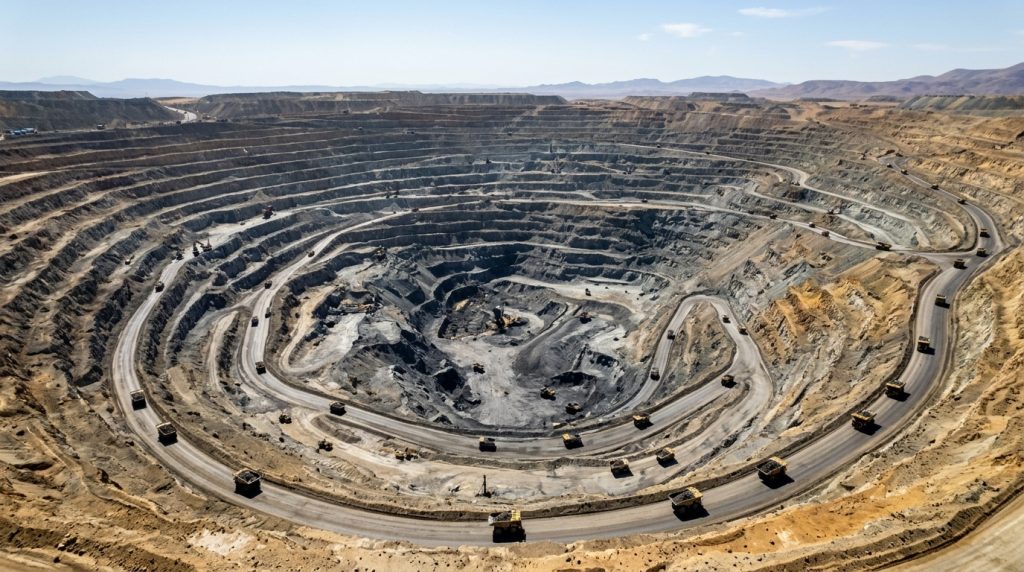
Exploration is the starting point of the mining value chain and the most important stage in transforming hidden geological potential into economic opportunities. Without sustained investment, modern technology, accurate data, and the participation of capable stakeholders, the sustainable development of the mining sector remains constrained. At a time when many of the country's mineral zones require further studies, greater investment risk-taking, and faster identification of exploitable deposits, the targeted entry of the private sector could become one of the main drivers of transformation in mineral exploration.
The finalization of a new framework for participation in mineral exploration and its notification to the provinces represents an effort to activate investor capacity, reduce reliance solely on government resources, and establish a more organized pathway for developing areas with mineral potential. If effectively implemented, this approach could strengthen the mining sector’s contribution to economic growth, the completion of value chains, and the supply of raw materials to mineral industries.
Ministry of Industry, Mine and Trade Seeks to Activate Mineral Advantages with a Focus on Knowledge-Based Companies
The Deputy Minister of Industry, Mine and Trade stressed the need to move beyond traditional mining practices, saying the ministry has placed a comprehensive program on its agenda to activate the country’s mineral advantages, focusing on smartening the mining value chain, supporting knowledge-based companies, extracting strategic elements, and developing a circular economy.
Vajihollah Jafari, referring to the strategic role of mining in the country’s industrial and economic development, added that despite Iran’s rich mineral reserves, the country remains some distance from its desired position. He said the ministry’s main policy in the new period is to move toward modern technologies, complete value chains, and develop mineral industries.
He described exploration as the first and most vital link in mining and emphasized that long-term planning in this sector requires an accurate and scientific understanding of the country’s mineral reserves.
New Judicial Directive Issued for Handling Foreign Currency Obligations of Non-Compliant Exporters
Under a directive issued on July 31, the Central Bank and commercial banks are required, immediately after the expiration of the deadline for fulfilling export-related foreign currency obligations, to refer cases involving amounts exceeding €3 million to the Public and Revolutionary Prosecutor’s Office, and cases involving amounts below €3 million to the Governmental Discretionary Punishments Organization.
A special judiciary committee dealing with economic corruption related to foreign currency has established a new framework for handling expired foreign currency obligations of exporters, as well as procedures for pursuing foreign exchange violations by importers and banking network managers.
Under the directive, banking network managers who fail to take legal action to recover allocated foreign currency will also be referred to the Banking Disciplinary Board.
New Mineral Exploration Partnership Framework to Be Issued with Focus on Private Sector
The Head of the Geological Survey and Mineral Exploration of Iran announced that a plan for private sector participation in the development of mineral zones has been finalized, saying the new framework for participation in mineral exploration will be notified to the provinces within a maximum of one month, with the aim of increasing the role of private investors and strengthening the mining sector’s contribution to the national economy.
Seyyed Mahmoud Fatemi Oqda, referring to the organization’s designation of 1405 as the “Year of Strong Support for the Private Sector,” said the organization’s main approach is to implement a partnership model involving active private sector participation in the development of mineral zones.
According to him, areas with mineral potential that had previously been identified based on geological studies and evidence have been proposed and categorized by the provinces as investment packages to facilitate targeted investor participation.
Fatemi Oqda added that the framework was developed in cooperation with the Mining Deputy of the Ministry of Industry, Mine and Trade and will be finalized after receiving and consolidating the views of economic stakeholders, with the aim of increasing efficiency and reducing shortcomings.
Expansion of Trade Cooperation Between Tehran and Islamabad on the Agenda
The Minister of Industry, Mine and Trade, referring to the growth in trade between Iran and Pakistan and the two countries’ trade volume reaching approximately $3 billion, stressed the need to remove trade barriers and move toward a $10 billion trade target.
Seyyed Mohammad Atabak, speaking at the opening ceremony of the 10th Iran-Pakistan Joint Trade Committee, said the comprehensive expansion of cooperation with neighboring, Muslim, and like-minded countries, particularly Pakistan, is among the strategic policies of the Islamic Republic of Iran. He added that the level of political and economic interaction between the two countries demonstrates a serious commitment to expanding bilateral relations.
He noted that economic relations between Tehran and Islamabad have followed an upward trend in recent years, adding that $10 billion in bilateral trade is a realistic and achievable target and that implementation of the free trade agreement could further activate this potential.
Mining Safety in Iran Still Falls Short of Global Standards
The experience of leading mining countries shows that modern mining safety is no longer limited to basic equipment. Instead, it is based on risk management, real-time monitoring, data analysis, preventive maintenance, continuous training, and a culture of stopping operations under unsafe conditions. However, a significant portion of Iran’s mines, particularly small-scale and underground mines, continue to operate with outdated equipment, old technologies, inadequate supervision, and insufficient investment in preventive measures.
According to official data, in 1400, only approximately 23% of the country’s active mines had an Occupational Health, Safety and Environment (HSE) unit. This figure indicates that structured safety management has yet to become institutionalized across a large part of the mining sector.
At the same time, the International Labour Organization (ILO) considers mining one of the world’s most hazardous occupations and emphasizes that despite accounting for approximately 1% of global employment, the sector continues to account for a disproportionate share of fatal occupational accidents.
In Iran, the safety gap appears to stem less from a lack of technical knowledge than from weak enforcement of regulations, aging technology, an underdeveloped safety culture, and viewing investment in this area primarily as a cost. These factors can turn any industrial accident into a human and economic crisis.