Iran’s Copper Exports Under the Shadow of Trade Restrictions; Products Stranded at Ports
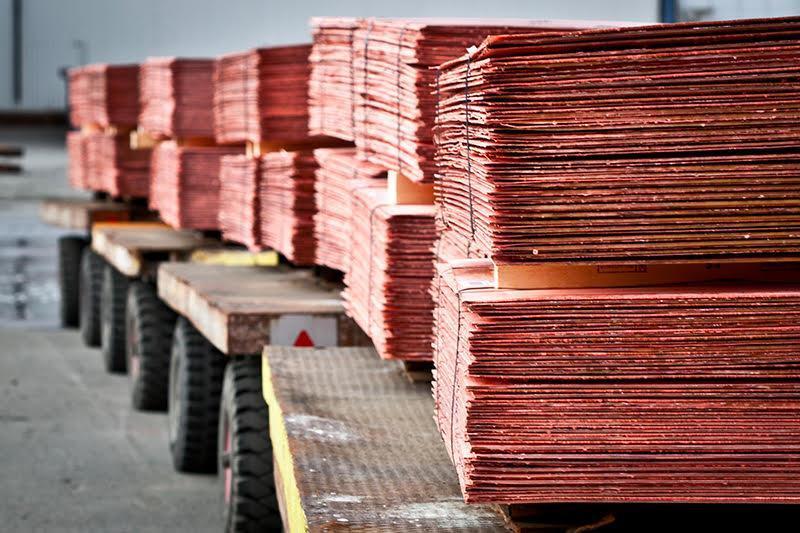
Keyvan Jafari Tehrani, a mining expert and senior analyst of global metals markets, sees the main challenge of the copper industry and its chain not on the demand side, but in trade export restrictions and the stockpiling of products at ports, and referring to the upward trend of this metal globally, he has raised the potential for copper prices to rise to $17,000 by the end of 2027.
The copper industry, as one of the main pillars of the non-oil economy, plays a prominent role in supplying raw materials for the electronics, automotive, construction, renewable energy, and pipe manufacturing industries, and developing the copper value chain from ore to cathode and high-value-added final products, in addition to reducing dependence on oil revenues, can bring significant foreign currency stability for the country; a matter that requires accelerating the implementation of infrastructure projects and removing investment obstacles in this field.
Iran is also one of the countries that enjoys reliable copper resources. In Mehr of last year (October 2025), Mostafa Feyz Ardakani, CEO of the National Iranian Copper Industries Company, said regarding the country’s copper reserves: Iran, with 66 million tons of copper, ranks sixth in the world’s copper mines, and this is a unique and rare opportunity that has been placed at the disposal of Iran’s economy, and this capacity must be converted into economic growth and development of the copper chain through smart management.
Kerman Province, as the beating heart of copper mining in the country, accounts for nearly 80% of the total proven discovered reserves, with East Azerbaijan and Razavi Khorasan provinces ranking next.
According to Ardakani, however, in the field of extraction and production, we rank between 13th and 16th in the world, and with the plans made, we are trying to improve our ranking in extraction. Therefore, despite this volume of valuable reserves, Iran’s share of global copper production and the exploitation rate of its mines are far from their existing potentials.
In this regard, Keyvan Jafari Tehrani, a mining expert and senior analyst of global metals markets, regarding the status and outlook of the copper industry in Iran, stated: Over the past 10 years, very good investments have been made in the country’s copper industry, and the formation and activity of specialized associations and societies in this field over the past nine years also indicate the increasing desire to be present and invest in this sector.
He added: Initially, the private sector, especially actors with experience in the iron ore industry, entered this field, and gradually large state-owned sectors and well-known listed companies in the iron ore and steel sector also joined the copper industry, which, given the significant volume of copper reserves in the country, paints a completely bright and promising future.
This mining expert noted: However, the only factor that in recent months has overshadowed not only the copper industry but the entire mining sector and even the country’s steel chain is the trade restrictions and problems over the past seven to eight months, which have had heavy and undeniable effects on the country’s exports.
Jafari Tehrani stated: Currently, a significant tonnage of copper chain products that have high export capacity and potential are either stranded in the country’s southern ports or stockpiled at mine sites; therefore, we hope that with the end of the war and the removal of trade blockages, the export path will be reopened so that the flow of foreign currency and liquidity return to the country’s copper chain can be realized.
Assessing the global trends of this red metal, he noted: The direction of global copper prices is completely upward and positive, although various components such as US interest rate changes and the supply-demand balance affect its short-term fluctuations, but at present the copper market is not facing a crisis on the demand side; rather, the main challenge is on the supply side; a matter driven mainly by factors such as ongoing crises and labor strikes at major Chilean mines and production decline due to falling reserves and ore grades in that country.
This senior analyst of international markets continued: Although assessing price targets up to the 2030 horizon requires more time and supplementary data, considering the fundamental variables governing the global market, copper has the potential for a staggering price rise to $17,000 by the end of 2027.
Jafari Tehrani, in conclusion, referring to the opportunities after the end of geopolitical tensions and the possible scenario of sanctions relief, stated: With the subsiding of tensions that have cast a shadow over the entire Iranian mining industry and if conditions for sanctions relief are provided, the country’s copper industry will have a high capacity to attract foreign investment.
Of course, one should not expect that global mining giants such as Rio Tinto, BHP Billiton, or Glencore—who act with caution following the unpleasant memory of Rio Tinto’s exit from Iran more than two decades ago—will quickly enter the market, but certainly smaller and medium-sized mining companies from second- and third-world countries will enter this arena, and the possibility of attracting a significant volume of foreign investment for the development of Iran’s copper industry will be provided.