Power for Production, Restrictions for Government Offices: President Stresses Stable Energy Supply for Industry
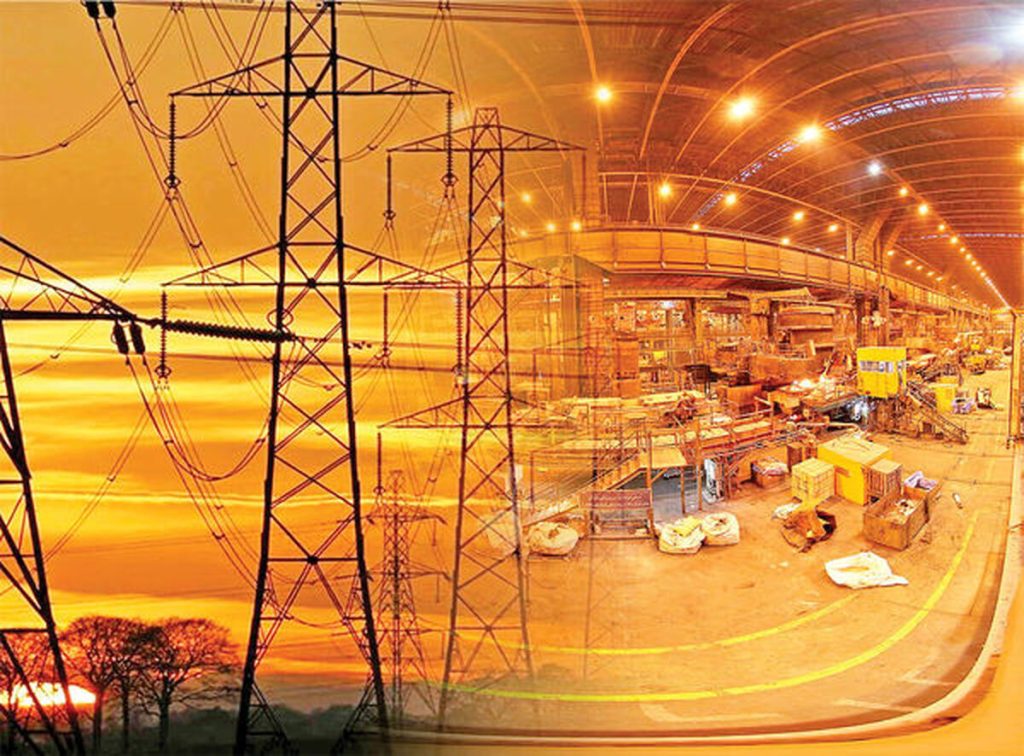
With "continuity of production" taking center stage on a day when the industry and mining sectors were the focus of policymakers, the President delivered a clear message to the country's executive bodies at the National Industry and Mining Conference: factory production must not be halted due to energy shortages, even if it requires imposing restrictions on government offices.
Iran’s President’s firm stance, underscored by his remark that “Let the government’s electricity be cut, but do not shut off electricity to industries for production,” reflects the administration’s determination to redefine priorities in managing the country’s energy imbalance while providing practical support for the productive sectors of the economy. The approach could signal a shift in policymaking in favor of production, employment, and the long-term sustainability of Iran’s industrial sector.
Industrial Power Supply Must Be Maintained, Even at the Expense of Government Offices
Speaking at the National Industry and Mining Day conference, the President emphasized that maintaining industrial production is a top priority and stated that electricity for industrial facilities must be supplied without interruption, even if this results in restrictions on government offices.
Reiterating that “Let the government’s electricity be cut, but do not shut off electricity to industries for production,” he instructed the Minister of Energy to prioritize measures ensuring the continuous supply of electricity to manufacturing units in order to prevent disruptions to the country’s industrial activities.
40% of 700 Trillion Toman Financing Allocated to Small Industries
Seyed Mohammad Atabak, Minister of Industry, Mine and Trade, announced during the National Industry and Mining Day ceremony that 40% of the 700 trillion toman financing package will be allocated to small and medium-sized enterprises (SMEs), emphasizing the need for targeted support for this sector.
He stated that production must become a shared priority across all branches of government, describing the manufacturing sector as the cornerstone of the country’s economic strength and safeguarding it as a national responsibility.
Atabak also stressed that, given the country’s current economic conditions, today’s decisions will have a direct impact on Iran’s future and coming generations, making the responsibilities of industry and mining officials greater than ever.
Development of Exploration Infrastructure and Mining Education Is Essential
Mohammad Masoud Samiei-Nejad, Chairman of IMIDRO, identified the shortage of basic exploration data and the decline in the number of skilled professionals as two of the country’s main mining challenges, stressing the need to expand exploration infrastructure and introduce mining education at the secondary school level.
Speaking at a specialized meeting hosted by the Geological Survey and Mineral Exploration Organization of Iran, he referred to the objectives of the Seventh Development Plan and described limited access to fundamental geological and exploration data as a major concern for mining stakeholders. He warned that continued limitations could hinder investment and the development of mining activities.
IMPASCO Moves Forward with Investor Attraction for 15 Mining Projects and Complexes
Omid Emami, Managing Director of IMPASCO, announced progress in the company’s program to attract investors and transfer 15 mining complexes and projects during the first quarter of the Iranian year 1405. The initiative aims to activate idle capacities, promote development in less-developed regions, and create employment opportunities.
According to Emami, the winner of the tender for the Golujeh gold mine in Zanjan has been selected, while the transfer of Gol-e Gohar Iron Ore Mine No. 2 in Sirjan has been awarded to a consortium of three major mining and industrial companies. At the same time, tenders have been announced for several other mines and mineral areas, including Kamran, Ashvand, Janja, and Tashk, while evaluations of applicants for several Gol-e Gohar mines and the Hirad gold mine are underway.
Emami also announced the launch of investor identification for the Khomroud coal mine and the preparation of transfer documents for the Siah Jangal and Goli mineral zones. He added that, in the exploration sector, 13 mineral blocks in South Khorasan and Razavi Khorasan, containing reserves of gold, copper, lead, zinc, silver, and chromite, have been included in the transfer program.
Global Refined Copper Production Rises 4.5%
According to a report by the International Copper Study Group (ICSG), global refined copper production increased 4.5% during the first quarter of 2026, reaching 7.29 million metric tons, compared with 6.978 million metric tons during the same period in 2025.
The report also showed that global refined copper production capacity reached 8.991 million metric tons during the period, up approximately 4% from 8.642 million metric tons a year earlier. Meanwhile, global copper mine production recorded a slight 0.2% decline, while international copper prices climbed above $13,500 per metric ton.