Cymat reaches official commercial agreement with Rio Tinto to take over aluminium composites business
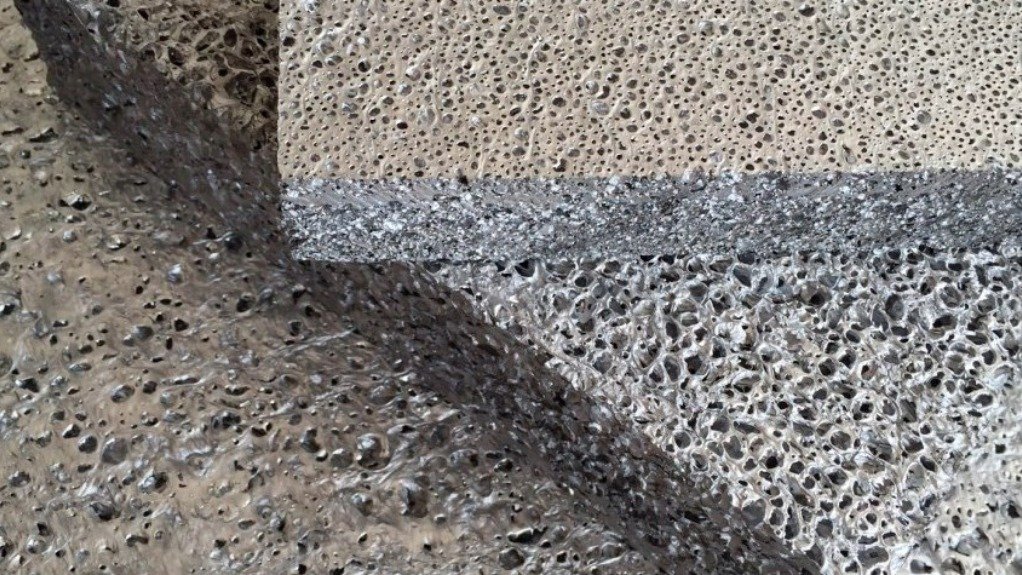
Cymat Technologies has signed a commercial agreement with aluminium major Rio Tinto Alcan to facilitate the transfer of Rio Tinto's commercial customers of their proprietary aluminium metal matrix composites (MMC) business to Cymat.
MMC is a ceramic particle-infused aluminium used primarily in the automotive and rail industries for lightweight components requiring extreme wear resistance.
Rio Tinto, which has been manufacturing and selling its proprietary MMC for over 40 years, has decided to exit the business owing to a strategic reorganisation. Rio Tinto is seeking a smooth and uninterrupted transition of this business for its long-standing customers.
Cymat uses this product as its primary input material to produce stabilised aluminium foam (SAF). Its familiarity with the material makes Cymat well qualified and uniquely positioned to take on this business line.
Cymat intends to establish MMC production capability within its existing Mississauga plant. Given the similarities and common skill sets required to produce MMC with its own SAF product, Cymat will have the ability to use its existing expertise and engineering know-how to efficiently and economically manufacture MMC.
Cymat has begun to purchase aluminium MMC from MC21, a US-based high quality, niche producer of MMC, and they have offered to assist Cymat with deploying high-end MMC production technology and know-how. This will enable Cymat to produce a larger variety of MMCs than those historically provided by Rio Tinto to facilitate reaching a broader customer base.
From a financial perspective, historical sales volumes provided by Rio Tinto suggest that Cymat could realise incremental yearly revenue of between $7.5-million and $10-million.
The commercial agreement with Rio Tinto requires Cymat to pay $750/t of MMC sold or used by Cymat for a period of five years, to a maximum total amount of $500 000.
Rio Tinto’s principal customers for this product are European brake disk manufacturers serving the large commercial vehicle and train markets.
Under the EU’s Euro 7 Standard, the EU is mandating a substantial reduction of harmful dust and debris emanating from braking systems including passenger vehicles.
These new standards have a phased implementation schedule, starting as early as November 2026.
Rio Tinto has received enquiries regarding MMC as a potential material to replace cast iron disks which are the principal generator of these restricted emissions. These business development opportunities will also be transferred to Cymat as part of this agreement.
EXPANSION VALUE
Capital costs for equipment related to the state-of-the-art technology that Cymat intends to deploy are estimated to be in the range of $2-million.
Cymat is planning to finance this initiative through a combination of equipment financing sources, potential federal and provincial grants, and cash on hand. Cymat anticipates that it will be fully commissioned and operational with this product line by early in the second quarter of 2027.
“The transfer of this new business line to Cymat provides the company with three major benefits. First of all, it adds a substantial uncorrelated, predictable, and now likely expanding revenue stream to Cymat’s existing business. With the company’s ability to utilise existing resources among other synergies, Cymat expects this venture to be profitable,” the company states.
Secondly, it reduces the cost of Cymat’s primary input material – the majority cost element – by a substantial factor. This positions Cymat to be price-competitive and a compelling solutions provider for targeted customers in its key automotive vertical.
It also opens up business opportunities in high-volume verticals where SAF has historically been price uncompetitive.
Lastly, the ability to customise the composition of the MMC creates the potential to develop and produce new types of SAF to service new SAF applications.
Cymat CEO and chairperson Michael Liik says while the agreement with Rio Tinto has taken much longer than expected to come to fruition, Cymat is finally able to act on this unique opportunity to leverage its existing facilities and unique skill sets and, in turn, realise a major expansion of its business.
“Combined with our current sales growth in the nuclear, military and particularly architectural verticals in our SAF business, this new initiative will accelerate our path to profitability. Since inception, we have looked for ways to bring this capability in-house and have now achieved this feat – together with assuming a new book of business.”