Opportunity Creation from Waste; China’s Roadmap for Governing the Green Steel Market
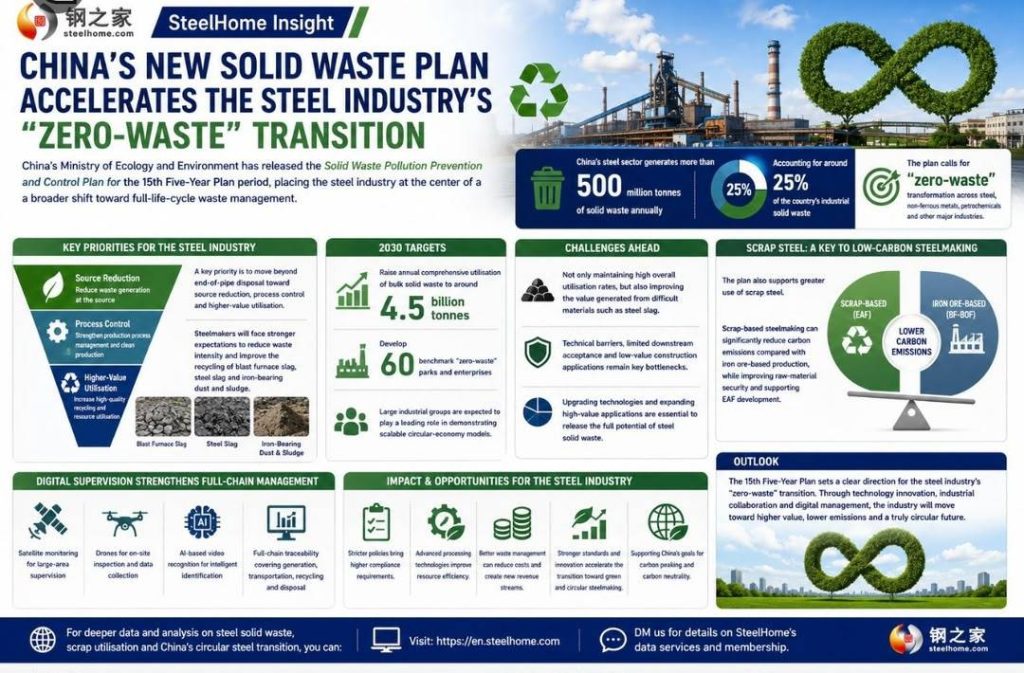
China's Ministry of Ecology and Environment, by issuing a comprehensive solid waste management plan for the 15th Five-Year Plan period, has introduced the steel industry as the main driver of the transition to a circular economy. This strategic roadmap, targeting the recycling of 4.5 billion tons of waste by 2030, charts a new path for enhancing production chain efficiency and achieving green steel—a model that can be utilized by major industrial groups for creating added value from structural waste.
China’s steel industry, which alone is responsible for producing 25% of the country’s industrial waste, is now obligated to move away from traditional waste disposal approaches and focus on intelligent management throughout the entire product life cycle. Under this plan, major steel companies must maximize the recycling rate of blast furnace slag and iron-bearing sludges using modern technologies, while reducing waste generation intensity in their operational processes.
Circular Economy and Development of Electric Arc Furnaces
One of the key pillars of this program is supporting scrap-based steelmaking and strengthening the position of electric arc furnaces. This strategic shift not only improves raw material supply security but also, through significantly reducing carbon emissions, strengthens the competitive position of leading companies in global markets. The Chinese government intends to define new operational standards for major industrial groups by establishing 60 “zero-waste” industrial pilot parks.
Digitalization and Digital Monitoring
At the regulatory level, this plan emphasizes the use of cutting-edge tools such as satellite monitoring, drones, and artificial intelligence. This digital infrastructure ensures full transparency across all stages of production, transportation, and waste recycling, providing companies with the opportunity to reduce overhead costs through process optimization and to create new revenue streams from the sale of high-value-added by-products.