How Mobarakeh Steel Turned the Idea of Production into an Industrial Strategy
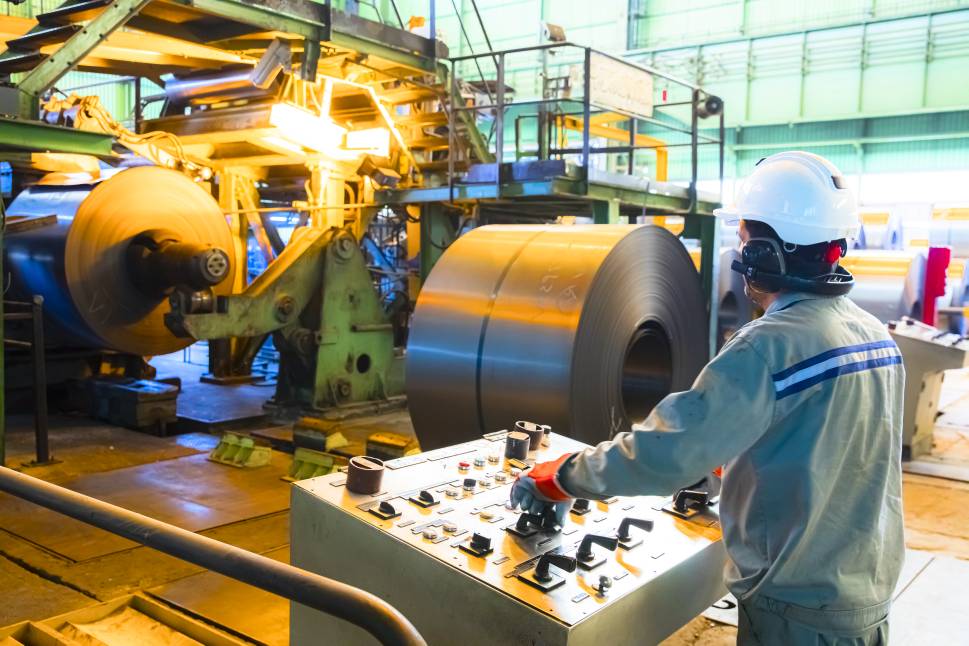
The martyred Leader of the Revolution regarded production as the foundation of economic independence and national strength, repeatedly emphasizing support for domestic manufacturing, self-sufficiency, and reliance on Iranian capabilities. Today, reviewing the experience of Mobarakeh Steel shows how these principles have been transformed into a practical industrial model through localization, technological development, and the strengthening of the domestic supply chain.
According to Madan News, the grand funeral ceremony of Ayatollah Seyyed Ali Khamenei, the martyred Leader of the Revolution, provided an opportunity to revisit the intellectual legacy of a figure who, for more than three decades, viewed the economy not merely as a matter of livelihood but as a pillar of national power. Among the many economic themes he consistently emphasized, none appeared more prominently than “production,” “support for domestic manufacturing,” “self-sufficiency,” and “reliance on domestic capabilities.” These concepts remained at the heart of his economic vision, from the naming of each year’s national slogan to the broader framework of the Resistance Economy.
The martyred Leader repeatedly stressed that “the backbone of the Resistance Economy is strengthening domestic production,” arguing that the path out of economic pressure lies in activating the country’s internal capacities rather than relying on foreign sources. He also emphasized on numerous occasions that production growth, employment, economic independence, and national strength are interconnected, and that strengthening domestic production directly enhances the country’s resilience.
Within this framework, Mobarakeh Steel’s experience demonstrates how the company has spent the past two decades translating these ideas from rhetoric into action. What began with the manufacturing of simple components has evolved into one of Iran’s largest industrial localization ecosystems.
Localization: From a Technical Project to a National Strategy
In the early years of Mobarakeh Steel’s operations, most equipment, components, and technical know-how were sourced from abroad. Even minor disruptions to imports could halt production. Beginning in the 1990s, however, the company adopted a different approach—starting with manufacturing basic components, progressing through reverse engineering, preparing technical documentation, transferring knowledge to domestic manufacturers, and ultimately designing complex industrial equipment.
Today, the outcome is not merely a higher domestic manufacturing ratio but the creation of an industrial ecosystem that brings together thousands of private companies, local manufacturers, knowledge-based firms, and Iranian specialists in technology development.
The figures illustrate this transformation. Mobarakeh Steel now sources more than 92% of its required equipment, components, and industrial items domestically, with some categories exceeding 95%. The company also works with more than 3,500 active suppliers and has successfully designed and manufactured over 7,168 high-tech and complex components domestically for the first time.
These figures represent more than production statistics; they demonstrate how a single industrial enterprise can become a national engine for technological development.
Production Beyond the Factory
The martyred Leader repeatedly emphasized that production is not simply the manufacturing of goods but the foundation of economic independence, employment, scientific progress, and national strength. In the Second Phase of the Revolution Statement, he also described a strong economy as a safeguard against foreign domination and stressed the importance of an economy built on production, knowledge, and technology.
Viewed from this perspective, localization at Mobarakeh Steel goes far beyond replacing imported components with domestic alternatives. It has become a process that facilitates knowledge transfer, supports the growth of knowledge-based companies, develops skilled human resources, strengthens supply chains, and enhances the country’s engineering capabilities.
Many manufacturers that once produced only basic components now design sophisticated steel industry equipment that serves not only Mobarakeh Steel but numerous other industries across the country.
Resilience in Difficult Times
Perhaps the greatest test of this strategy came during years of sanctions and severe import restrictions, when many industries struggled to secure critical components.
According to Mobarakeh Steel’s Deputy for Procurement, the experience of the steel industry demonstrated that dependence on foreign supply chains creates significant vulnerabilities, while only organizations with strong domestic supply networks are capable of maintaining stable production.
This assessment proved itself once again during the recent conflict. The rapid return of Mobarakeh Steel’s production units to full operation was not merely an operational achievement but the result of years of investment in self-reliance, technical expertise, domestic supplier development, and reduced dependence on foreign sources.
For this reason, the company’s CEO stated in his message marking the funeral of the martyred Leader that maintaining production is the greatest tribute to his vision, emphasizing that keeping the production lines running guarantees the country’s dignity and independence.
Foreign Exchange Savings: The Result of a Strategic Choice
One of the most significant outcomes of localization has been reducing dependence on foreign currency. According to Mobarakeh Steel, localization initiatives generated €12.2 million in economic savings for both the company and the country in 2025 alone. The company had previously announced that its localization efforts had prevented the outflow of $279 million in foreign currency.
In an economy facing currency volatility, import restrictions, and external pressures, every component designed and manufactured domestically reduces production risks, shortens procurement times, eliminates overseas transportation costs, and strengthens the country’s industrial security.
From Foreign Procurement to Technology Development
The head of Mobarakeh Steel’s Localization Unit emphasizes that the company’s objective has never been limited to manufacturing components. Rather, its core strategy has been to elevate Iranian manufacturers to a level where the quality of their products can compete with international alternatives.
As a result, many highly specialized products required by the steel industry—from pumps and industrial valves to sophisticated production-line equipment—are now designed and manufactured domestically.
This marks the point where localization moves beyond reverse engineering and approaches genuine technological innovation.
Social Responsibility Through Production
Another often-overlooked aspect of this strategy is localization’s contribution to regional development.
By creating business opportunities for thousands of domestic manufacturers, Mobarakeh Steel has not only strengthened industry but also generated employment opportunities for engineers, technical specialists, and knowledge-based companies.
Alongside technology transfer, the company has sought to embed sustainability principles, quality standards, and corporate social responsibility throughout its supply chain, demonstrating that industrial development cannot be sustainable without investing in human capital.
A Legacy Sustained Through Production
Years ago, during a visit to Mobarakeh Steel, the martyred Leader described the company as a symbol of Iran’s industrial capability. Looking back today, it becomes clear that his assessment referred not only to steel production itself but also to the company’s ability to build an integrated ecosystem of knowledge, technology, self-confidence, and innovation.
As the country mourns the architect of this economic vision, perhaps the best measure of its realization is not the number of slogans proclaimed but the number of factories that have successfully reduced dependence on foreign sources, localized technology, maintained sustainable production, and created added value within the country.
Mobarakeh Steel’s experience demonstrates that when localization becomes a long-term strategic commitment, it does far more than reduce costs. It develops human capital, generates knowledge, strengthens supply chains, improves economic resilience, and enables industry to keep production moving even under the most difficult circumstances.
One could argue that the continuation of this path represents the very legacy the martyred Leader consistently championed over the years—a legacy that seeks the future of Iranian industry not through dependence on external resources but through confidence in domestic capabilities, Iranian expertise, and national production.