How TECO is bridging compliance and practicality
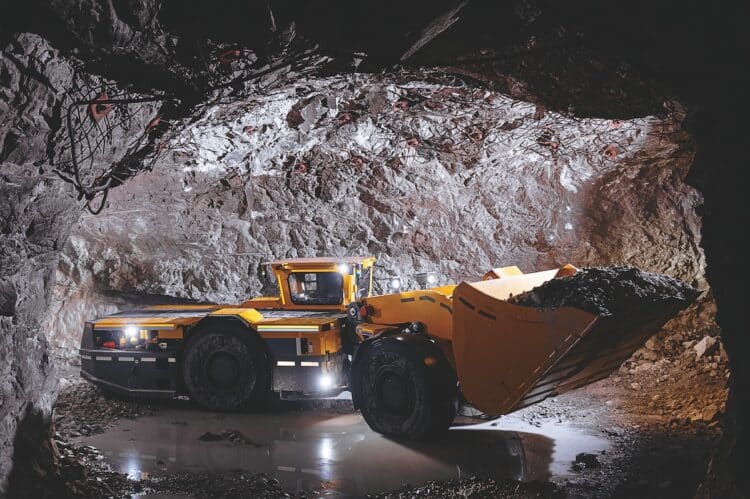
TECO Australia and New Zealand is bridging the gap between underground motor compliance and site-specific installation through its MAX Ex d range.
Underground mining environments can place especially demanding requirements on electrical equipment. Safety certification, thermal performance and installation flexibility all play a critical role in day-to-day reliability.
For original equipment manufacturers (OEMs) and site engineers, selecting and adapting motors for these conditions is rarely straightforward, particularly when standard configurations do not align with the realities of underground installations.
TECO Australia and New Zealand is addressing this challenge through its TECO MAX Ex d underground motor range, combining full certification with local stock availability and accredited modification capability designed specifically for the mining sector.
TECO Australia and New Zealand product manager for low voltage motors Atheer Yaseen Nashi said underground motor selection is defined by a strict certification framework, but successful deployment depends just as much on how well the equipment can be adapted to site-specific conditions.
“Underground installations rarely match a standard specification,” Nashi told Australian Mining. “Mounting arrangements, cable entry orientation, shaft dimensions and auxiliary requirements like anti-condensation heaters vary considerably from one installation to the next.
“The certification scope needs to be right, and then the physical configuration needs to suit the specific application to ensure the replacement is easy and trouble-free.”
Underground motors must comply with hazardous-area requirements defined under the Ex standards system, which governs equipment used in explosive atmospheres such as firedamp environments.
The TECO MAX Ex d range is built around Group I certification, which applies specifically to underground mining environments. It carries dual IECEX and ATEX Ex db I Mb and Ex db IIB T4 Gb certifications, reflecting flameproof enclosure construction designed to ensure that any internal ignition is contained within the motor housing and cannot propagate into the surrounding atmosphere.
Alongside compliance requirements, thermal performance remains a critical factor in ensuring motors can operate continuously in demanding conditions. The MAX Ex d range utilises Class F insulation rated to 155°C, combined with a low temperature rise design that provides additional thermal headroom during operation.
This thermal margin becomes particularly relevant in environments where equipment is required to operate under sustained load.
“This means that the motor operates well within its insulation rating under continuous load, which gives useful and necessary thermal headroom in high-ambient underground conditions,” Nashi said.
“For continuous duty applications where ambient temperatures are elevated, that margin between operating temperature and insulation rating is a relevant part of the specification decision.”
Supporting this technical foundation, the TECO MAX Ex d range is stocked locally in Australia and New Zealand at 415V, covering outputs from 0.75–110 kW, and features heavy-duty cast-iron frames across the entire range. For higher voltage applications, 1000V units are available to order.
Cast iron construction provides mechanical durability suited to underground environments, while maintaining alignment with the protective requirements of Ex d certification. Local availability of stocked units also helps mining operators reduce lead times and maintain operational continuity.
A key extension of this local support model is TECO’s accredited Modshop facilities in Australia and New Zealand, which enable application-specific modifications to be completed without the need to return equipment to the factory.
The TECO Modshop capability covers a range of adjustments, including terminal box orientation changes, cable entry modifications, anti-condensation heater installation, and shaft and mounting adjustments.
“The TECO Modshop is an accredited modification facility,” Nashi said.
“Modifications to an Ex d motor need to be performed within an approved framework to maintain the hazardous area certification. Doing that locally means that the turnaround time frame is significantly shorter than a factory return cycle.”
This localised capability allows operators to respond more quickly to site-specific engineering requirements while maintaining compliance with the certification.
TECO’s technical team works through each application in detail, including drive configuration, cable entry arrangement, terminal box orientation, and voltage requirements. Engagement typically begins with a technical data sheet request or certification scope review before progressing to specific modification requirements.
For engineers, having complete documentation available early in the specification process is an important enabler of efficient decision-making.
Nashi recommends maintaining the full certification scope document and the technical data sheet on file to streamline future equipment selection.
“Having those available when specifications are being reviewed, rather than at the point of ordering, simplifies the process considerably,” he said.
As underground mining operations continue to evolve, the combination of certified design, thermal resilience and localised modification capability is increasingly important in supporting safe and efficient production outcomes.
TECO’s MAX Ex d underground motor range brings these elements together, offering Australian mining operators a solution designed for compliance and adaptability.