Localization of Ultra-Sensitive Nozzles for Continuous Casting Machines at Hormozgan Steel
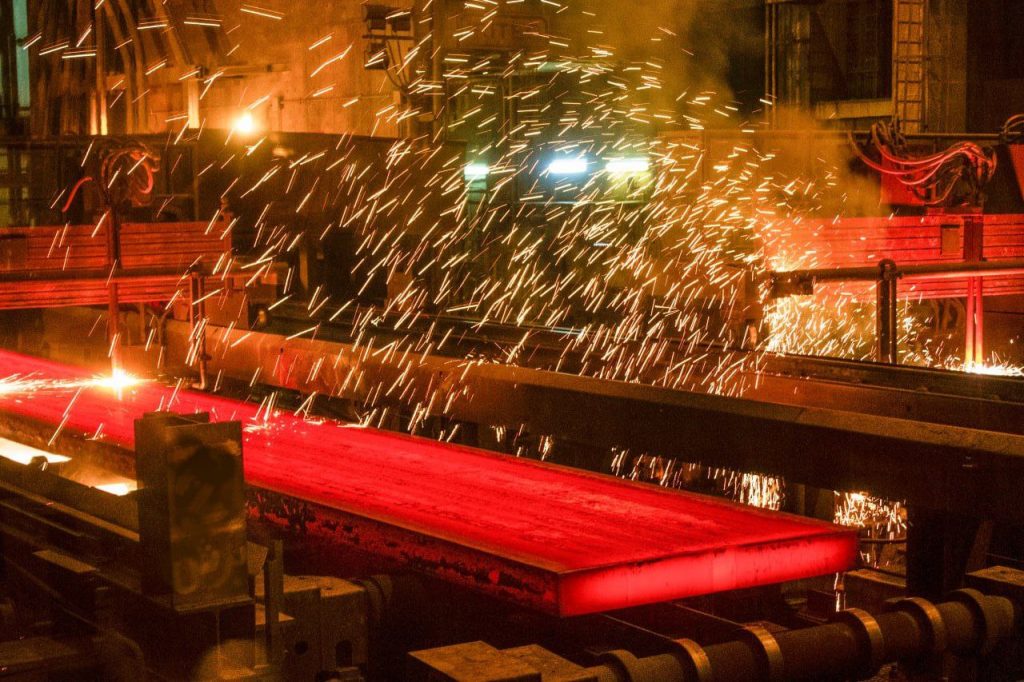
The project for localization of water spray nozzles for the continuous casting machine at Hormozgan Steel Company was successfully implemented relying on the knowledge of domestic experts and through the efforts of the Localization Unit of the Technical Office and Maintenance Planning, yielding valuable technical and economic results for the company.
According to a report by Ma’adan News, the Head of the Technical Office and Maintenance Planning at Hormozgan Steel Company announced this news, stating: In this project, a set of nozzles used in various sections of the continuous casting machine, which were previously supplied by the reputable brand LECHLER, were reverse-engineered, designed, and manufactured, and successfully passed performance evaluation stages.
According to Ehsan Karimzadeh, the localized nozzles—including the mould spray nozzle and Segment 1 nozzle, which are considered the most sensitive and strategically critical nozzles in the process—were placed in operational conditions after manufacturing and technical testing, and their performance was successfully verified.
Strategic Importance of Spray Nozzles in the Continuous Casting Process
Stating that water spray nozzles are among the most important equipment affecting product quality, process stability, and the reliability of the casting machine, he added: The primary function of these nozzles is to control the rate of heat extraction from the solidifying product and to create a uniform cooling distribution throughout the casting process.
The Head of the Technical Office and Maintenance Planning at Hormozgan Steel Company noted: The performance of this equipment directly impacts slab surface quality, internal product quality, solidification uniformity, control of thermal stresses, stability of the initial solid shell, prevention of unplanned production stoppages, reduction of scrap and defective products, as well as increasing production line productivity. Moreover, in the steel industry, even minor changes in the water spray pattern can lead to changes in heat transfer rates and the occurrence of metallurgical defects; therefore, spray nozzles are classified as ultra-sensitive process equipment.
The Role of Nozzles in Slab Quality and Production Risk Reduction
He further referred to cooling quality in the casting machine as one of the main factors determining the final quality of the slab and added: Any non-uniformity in water distribution can lead to longitudinal cracks, transverse cracks, corner cracks in the slab, localized thermal stresses, geometric distortion of the product, internal segregation, and an increased risk of breakout and production stoppages. Hence, the proper functioning of spray nozzles is not merely a maintenance or parts supply issue, but a direct factor in ensuring product quality and maintaining the factory’s production capacity.
Functional Compliance of Localized Nozzles with Reference Specifications Provided in Technical Catalogs
Mehdi Rafizadeh, Head of Localization, Parts and Equipment Engineering at Hormozgan Steel Company, also stated in this regard: Although these equipment components appear small in size, they are in fact among the most precise process components of the casting machine. The functional specifications of a nozzle are directly dependent on factors such as the precise geometry of internal channels, dimensions of flow distribution chambers, fluid exit angle, quality of internal surface machining, very tight manufacturing tolerances, and the type of material and its resistance to corrosion and wear. Therefore, the slightest change in the internal dimensions of the nozzle can cause significant changes in flow rate, spray angle, water distribution uniformity, droplet size, and heat transfer efficiency. For this reason, manufacturing this equipment requires knowledge in the fields of fluid mechanics, heat transfer, metallurgy, precision machining, and quality control.
Achievement of In-House Technical Knowledge for Manufacturing and Quality Control of This Equipment
He added: After manufacturing the nozzles, specialized tests were conducted to evaluate their performance. The test results showed that the functional specifications of the produced nozzles, including flow rate, operating pressure, spray angle, and water distribution pattern, match the reference specifications provided in the LECHLER technical catalogs, and their performance falls within the required process standards. The successful operation of the mould nozzle, which is considered the most sensitive nozzle of the casting machine, demonstrates the achievement of in-house technical knowledge for manufacturing and quality control of this equipment.
Technical and Economic Achievements
According to the Head of Localization, Parts and Equipment Engineering at Hormozgan Steel Company, the key achievements of this project include: Acquisition of technical knowledge for manufacturing specialized continuous casting machine nozzles; reduction of supply lead time from an average of 7–8 months to approximately 1 month (over 85% reduction); reduction of supply cost to about one-third of the foreign equivalent; reduction of dependence on foreign suppliers and the risks associated with sanctions and import restrictions; increased equipment reliability and production stability; and establishment of infrastructure for localizing other sensitive process equipment.
He also added: Given the direct role of spray nozzles in heat transfer, solidification control, and final slab quality, this project, in addition to economic savings, has had a direct impact on reducing production risks, improving product quality, and enhancing the company’s operational resilience.
Localization of Continuous Caster Water Spray Nozzles: A Successful Example of Technical Knowledge Transfer and Development of Domestic Engineering Capability
Rafizadeh said: Overall, the localization project for continuous casting machine water spray nozzles goes beyond the manufacturing of a single component; it is a successful example of technical knowledge transfer, development of domestic engineering capability, and reduction of dependence on foreign sources. Furthermore, the success in manufacturing and operating the mould nozzle—as the most sensitive process nozzle—along with the manufacturing of other nozzles used in various segments of the casting machine, demonstrates the technical capability of the organization in localizing strategic equipment for the steel industry.
Economic Savings and Production Stability
He emphasized: This achievement, in addition to generating economic savings, plays an important role in enhancing production stability, improving product quality, and realizing the goals of industrial self-sufficiency, and can serve as a successful model for localizing other critical equipment in production lines. The localization project for continuous casting machine water spray nozzles was successfully completed with the aim of reducing dependence on foreign suppliers, increasing production stability, and developing domestic technical knowledge.
Constructive Interaction of Organizational Units in Achieving Localization
The Head of Localization, Parts and Equipment Engineering at Hormozgan Steel Company regarded the success of the localization project for continuous casting machine water spray nozzles as the result of synergy, constructive interaction, and continuous efforts of various company units, and stated: On this occasion, we sincerely express our appreciation and gratitude for the valuable cooperation and support of the Purchasing Unit in following up on supply processes, executive coordination, and effective collaboration in advancing the project, as well as the specialized efforts and close cooperation of the Casting Maintenance and Repair (Maintenance) Unit in identifying needs, providing technical expertise, installation, performance monitoring, and operational evaluation of the localized nozzles—which played a decisive role in the success of this project. We hope that with the continuation of these interdepartmental collaborations and the utilization of domestic capabilities, the groundwork will be laid for the localization of other strategic equipment and further development of the company’s technical and engineering capacities.