Why mining duty cycles break OEM assumptions
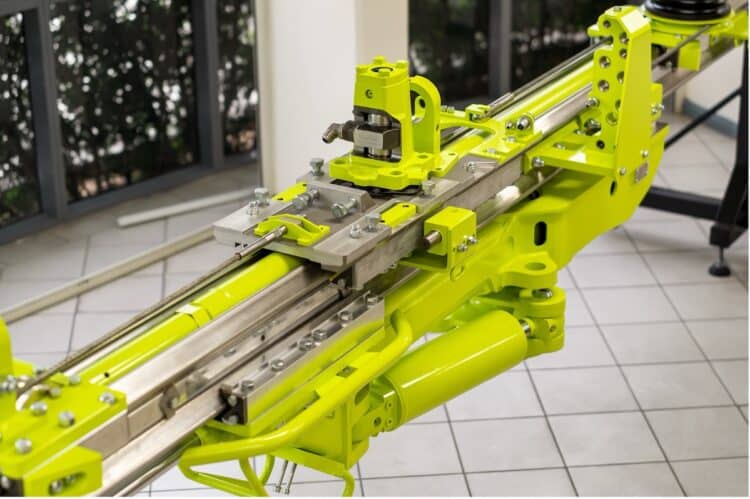
Reliability isn’t failing because components are defective. It’s failing because operating reality has changed.
Mining companies invest heavily in equipment reliability. Preventive maintenance programs are mature, maintenance teams are highly capable, and original equipment manufacturer (OEM) components are engineered to exacting standards.
Yet despite this, many operations continue to experience recurring component failures, unpredictable wear patterns, and persistent downtime events.
The question is why
The common assumption is that reliability issues are the result of component quality, maintenance execution, or isolated operational factors. However, in many mining environments, the underlying issue is more fundamental.
The equipment is no longer operating within the conditions it was originally designed for.
The challenge with standardised design
OEM components are developed around a set of defined operating assumptions.
These assumptions typically include expected load ranges, alignment conditions, environmental exposure, maintenance intervals, and utilisation profiles.
For most industrial applications, this approach works extremely well. Standardisation reduces cost, simplifies supply chains, and enables equipment to be deployed across multiple sites without extensive redesign.
The challenge is that mining rarely behaves like the average operating environment.
Load intensity fluctuates. Operator behaviours vary. Environmental contamination accelerates wear. Duty cycles extend beyond original expectations. Equipment is often pushed harder, longer, and under more demanding conditions than the design envelope anticipated.
Over time, the gap between assumed conditions and actual conditions begins to widen.
And reliability begins to drift.
When variability becomes the operating condition
Across underground and surface mining operations, variability is not an exception. It is the operating condition.
Maintenance teams regularly manage the effects of:
Dynamic and fluctuating loads
Progressive misalignment
Abrasive contamination
Cyclic fatigue
Extended utilisation windows
Uneven load distribution
Individually, these factors may appear manageable.
Collectively, they alter how stress behaves within a component and across the broader equipment system.
The result is rarely immediate catastrophic failure.
Instead, sites experience a gradual increase in intervention frequency, shorter wear life, growing maintenance burden, and reduced confidence in component performance.
These are often treated as normal operational realities. They shouldn’t be.
The cost of engineering for the average
When equipment consistently operates outside its original design assumptions, maintenance teams can find themselves trapped in a cycle of acceptable underperformance.
Components may still achieve service intervals.
Maintenance schedules may still be followed.
Yet failures continue to occur.
This creates hidden costs that extend far beyond the component itself:
Increased downtime
Escalating labour requirements
Secondary equipment damage
Inventory buffering
Reduced equipment availability
Greater operational uncertainty
The issue is not necessarily that the component has failed.
The issue is that the operating environment has changed while the design remains unchanged.
Redefining reliabilityReliability should not be measured solely by adherence to original specification.
Reliability should be measured by performance under actual operating conditions.
This requires a shift in thinking.
Instead of asking whether a component meets specification, organisations should ask whether the specification reflects the conditions in which the asset is truly operating.
That distinction matters.
Because when operating reality diverges from design assumptions, reliability becomes increasingly dependent on tolerance rather than engineering alignment.
Engineering for real duty cycles
Addressing this challenge does not necessarily require complete equipment redesign.
Often, targeted engineering interventions can significantly improve reliability outcomes.
Examples include:
Geometry refinements that redistribute load paths
Material selection aligned to actual wear mechanisms
Surface treatments suited to environmental exposure
Tolerance adjustments that account for field assembly conditions
Design modifications reflecting true cyclic loading patterns
The objective is not to create stronger components.
The objective is to ensure that loads behave the way the design expects them to.
When engineering reflects real duty cycles, reliability becomes more predictable, more controllable, and ultimately more valuable to the operation.
Moving beyond original specification
Standardisation will always play a critical role in mining equipment design.
But mining operations are increasingly being challenged by utilisation rates, operating variability, and environmental conditions that exceed historical assumptions.
In these environments, reliability is no longer simply a product outcome.
It becomes a system outcome.
For maintenance leaders, reliability engineers, and operations teams, the opportunity is clear: assess where operating reality has diverged from design assumptions and determine whether engineering intervention can restore alignment.
Because the goal is not simply to replace components.
The goal is to engineer reliability around the conditions that actually exist.