NWU centre awarded Phase 2 of the South African Circular Minerals and Metals Initiative
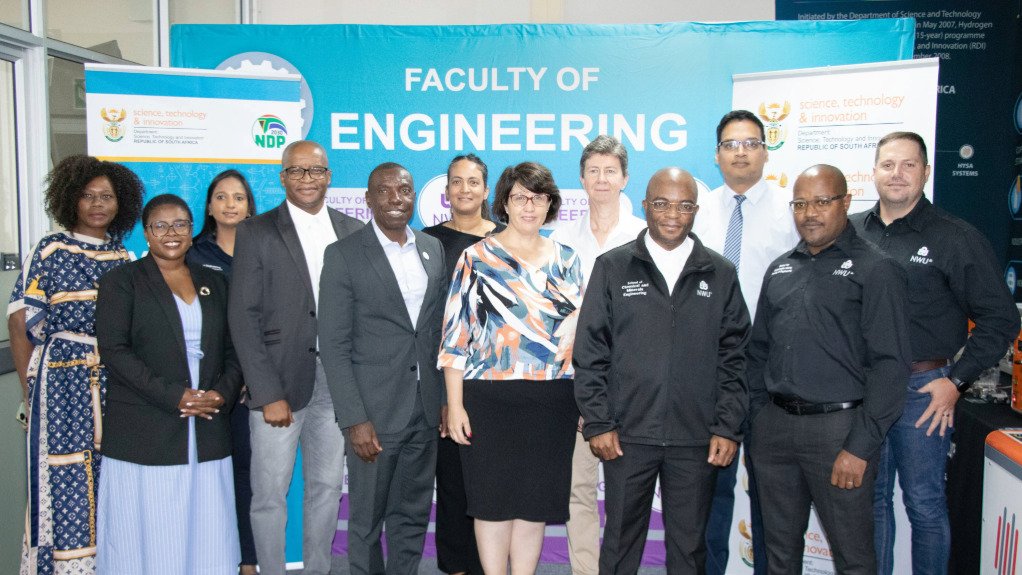
The Department of Science, Technology and Innovation (DSTI) has awarded Phase 2 of the South African Circular Minerals and Metals Initiative to North West University’s (NWU’s) Centre for Sustainable Mining.
South Africa is richly endowed with mineral resources and the mining sector plays a vital role in the country’s economy, by supplying minerals and metals into the domestic market and the global economy.
However, as a major consumer of energy, water and chemicals, the sector is resource- and carbon-intensive and faces increasing constraints.
In recent years, the circular economy has gained significant traction among business and government as a means of managing resources more sustainably, reducing costs and improving global competitiveness.
In a joint media release, the Council for Scientific and Industrial Research (CSIR) and NWU note that the South African government recognises the potential of the circular economy to address growing resource challenges, meet national climate and sustainability commitments and create new socioeconomic opportunities, by transforming existing sectors and unlocking new circular businesses and business models.
The Circular Economy Science, Technology and Innovation (STI) Strategy, launched in 2024, recognises the mining sector as one of three priority sectors with significant potential to adopt and scale circular practices, thereby supporting the DSTI’s vision to modernise the sector.
The strategy highlights three priority areas in circular minerals and metals: resource security, resource efficiency and diversification of sources.
“As an extractive-based industry, the mining sector has often been excluded from circular economy discussions,” notes professor Linda Godfrey, manager of Circular Innovation South Africa and custodian of the circular initiative programme.
“However, with growing pressure on – and interest in – South Africa’s mineral resources, the circular economy provides considerable opportunities for the mining sector to manage risk and diversify sources of minerals and metals. It also provides a framework within which to address increasing tensions around critical minerals,” she explains.
The CSIR and NWU explain that Phase 1 of the initiative, led by the Mandela Mining Precinct, focused on understanding the current landscape and establishing the foundation for developing a circular minerals and metals STI sub-strategy to guide the National System of Innovation (NSI) and the mining sector’s investment in circular economy STI.
Phase 2 is aimed at consolidating this sub-strategy and strengthening collaboration and partnerships across the NSI, as well as between the NSI and the private sector.
The CSIR and NWU say the intention is to use STI to assist the private sector in adopting, de-risking and scaling circular interventions, delivering tangible benefits to the local mining industry.
“The Centre for Sustainable Mining at NWU was the right choice for this next phase,” explains DSTI deputy director-general for socioeconomic innovation partnership Dr Mmboneni Muofhe.
Established in 2024, the CSIR says the centre is committed to responsible and environmentally conscious mining through impactful education, research and partnerships.
“This includes equipping the next generation of engineers and practitioners with future-focused mining education through relevant sustainability and sustainable mining degrees, diplomas and short courses,” adds Centre for Sustainable Mining director Dr Sihe Nhleko – a focus that aligns closely with NWU’s 2024 and Beyond strategy.
“We look forward to working closely with the South African mining sector to better understand the business case and technology solutions required to transition towards more circular practices,” Nhleko said at the official launch of the initiative in Potchefstroom on February 6.