Congo copper exports rose 10% last year as China drives output
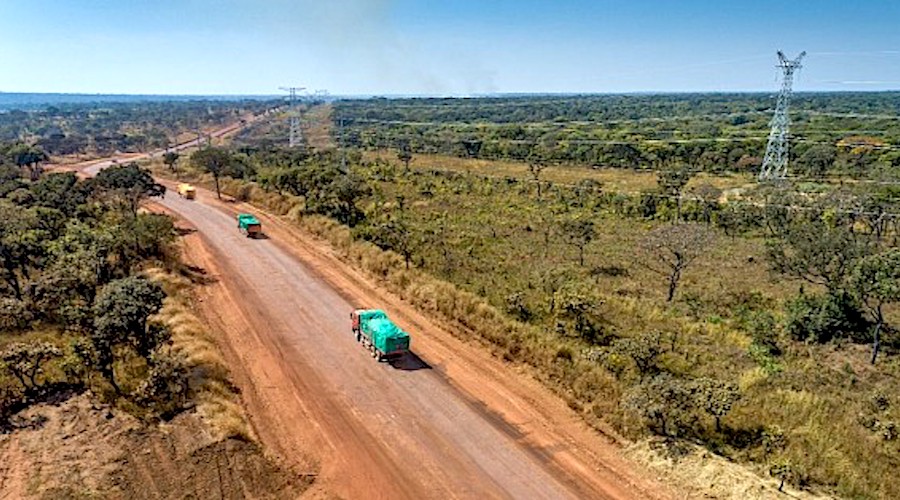
The Democratic Republic of Congo increased its copper exports by almost 10% last year, cementing its status as the world’s second-largest producer of the industrial metal after Chile.
The central African nation’s copper shipments rose to 3.4 million tons in 2025, up from 3.1 million tons a year earlier, provisional government data released during a mining conference in Cape Town shows.
Congo’s expanding output provides some relief to a copper market that’s suffered a series of supply shocks, following accidents and disruptions at operations worldwide. Those outages, combined with the difficulties in building new mines, come as demand for the metal is set to soar with the clean energy transition and the artificial intelligence drive.
Supply strains have contributed to copper’s 40% gain over the past 12 months, with the metal surging to a record above $14,500 a ton at the end of January.
Chinese firms produce most of Congo’s copper. China’s CMOC Group Ltd. owns the country’s No. 1 and No. 3 operations – the vast Tenke Fungurume mine, which accounted for 519,000 tons of the metal, and the Kisanfu project which yielded 228,000 tons, according to the data published by Congo’s mines ministry.
Congo’s second-biggest copper mine was Kamoa-Kakula – a joint venture between Canada’s Ivanhoe Mines Ltd. and China’s Zijin Mining Group Ltd. – which produced 400,000 tons in 2025.
“Congo will be a world-leader,” Robert Friedland, founder and co-chairman of Ivanhoe Mines, said in an interview with Bloomberg News this week. “The rate of growth of copper production in the Congo is by far the fastest in the world.”
Chile’s output last year remained the world’s highest, at an estimated 5.3 million tons, according to the US Geological Survey. However, Congo has shot up the global rankings recently, surpassing the likes of Peru and China, with its contribution to global supply more than tripling in the past decade.
Congo is normally also the world’s biggest source of cobalt, which is used in electric-vehicle batteries as well as the defense and aerospace industries. In 2025 though, the country’s shipments declined by almost 80% to 44,500 tons, after the government first banned exports in February and then slowly introduced strict quotas from October.
Copper and cobalt are typically extracted together from Congolese mines.
President Donald Trump’s administration is prioritizing shoring up supplies of critical minerals and bolstering his country’s capacity to process those materials. An important pillar of the strategy to lessen US dependence on China is a Dec. 4 partnership concluded with Congo’s government which grants American investors preferential access to some of the central African nation’s abundant reserves of copper, cobalt, lithium and tantalum.
The bilateral pact has already driven several potential US-led transactions.
Orion CMC – a new vehicle led by specialist financier Orion Resources Partners with backing from the state-owned US International Development Finance Corp. – announced a preliminary deal to buy stakes in Glencore Plc’s Congolese copper-cobalt mines.
Virtus Minerals Inc. – a firm headed by veterans of the US military and intelligence – has also struck an agreement to buy Chemaf SA, which ran into financial trouble while building what will be one of the world’s largest cobalt mines.
Other major copper producers in Congo are the Sicomines project controlled by Chinese state-owned companies and units of Glencore, Zijin and China Nonferrous Mining Co.