Transnet successfully rebuilding its coal (and other) rail transport capacity
Transnet is on track to return to profitability by the end of next month, Group CEO Michelle Philips told delegates on the second day of the twenty-first annual Southern African Coal Conference, in Cape Town, on Friday. “Our growth is South Africa’s growth,” she affirmed. “We think our strategy is working.”
The coal rail corridor from Limpopo and Mpumalanga provinces to Richards Bay on the KwaZulu-Natal coast was one of the priority areas for the group. She explained that responsibility for the actual track and signalling infrastructure was now vested in the Transnet Rail Infrastructure Management (TRIM) division, while operating the coal trains was the responsibility of Transnet Freight Rail (TFR). TRIM is a regulated agency, under its own independent board, which oversees a national total of 30 400 km of track. In contrast, TFR is one of the group’s operational entities.
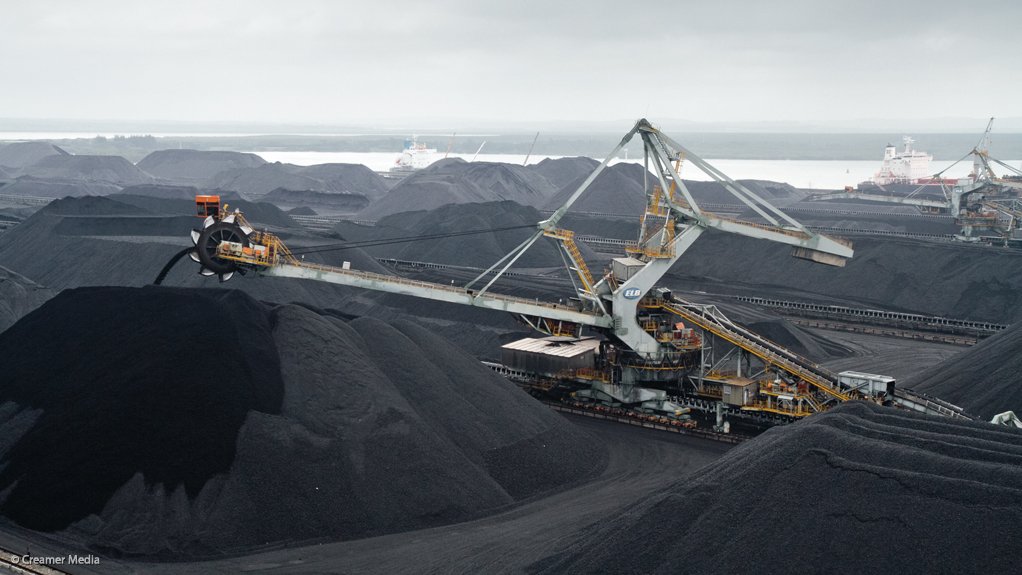
Transnet is busy rebuilding the capacity of its coal line (indeed, of all its lines). Volumes carried to the Richards Bay Coal Terminal are increasing, year-on-year. For this year it is hoped to reach just over 58-million tons. The target for 2026/27 is 62-million tons. It could hit 77-million tons the year after that, but 77-million tons is certainly the target for 2028/29.
The group was collaborating with the coal industry to achieve these objectives. She reported that the collaboration that Transnet was receiving was “absolutely amazing”. The group expected the country’s coal exports to remain stable until 2035. However, after that, they were expected to enter a long-term decline.
In terms of total cargo carried on all its lines, TFR had hit a nadir of 149.5-million tons during 2022/23. “You’ll never see 149 again!” she assured, to audience applause. The figure for 2023/24 had been 151.7-million tons and for 2024/25, 160.1-million tons. Transnet, she noted, had reversed the decline in the freight volumes it carried.
“We want to move more volumes, so we can reduce the cost of doing business in South Africa,” elucidated Philips. “The goal is to get to 250-million tons.”
Just one of the infrastructure investments made to help achieve this was the manufacture of 177 Class 23E locomotives by Transnet Engineering (another of the group’s operational entities) in Durban. (Of these, 71 had already been assigned to the coal line and another 29 would join them by June, to reach the assigned total of 100, all fitted with electronically-controlled pneumatic braking systems.)
This was against the against the background of railway operating reforms which would see TFR become only one of 12 rail operating companies in the country, albeit the biggest. The other 11 would be private-sector companies. She declined to identify the 11, as the necessary rail access agreements were still being developed and signed.