Khuzestan Steel Loses 60% of Production Over Past Four Years
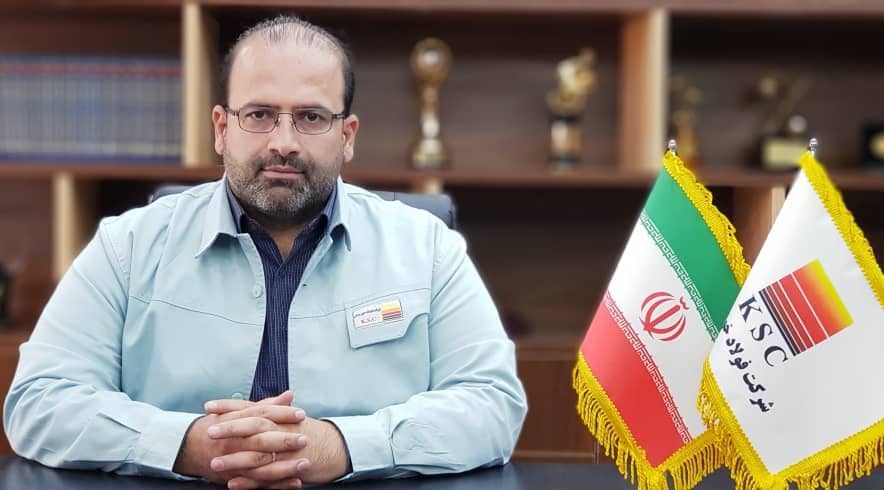
According to the CEO of Khuzestan Steel Company, energy imbalances have caused a 60% loss in the company’s steel production over the past four years, resulting in damages exceeding 600 trillion rials (60 hemats).
Amin Ebrahimi, CEO of Khuzestan Steel Company and Vice Chairman of the Iranian Steel Producers Association, pointed to the damage caused by energy imbalances to the national steel industry, stating: “Despite our discussions with the Ministry of Energy at the end of the Iranian year 1403 (March 2025), in which we requested that the least amount of energy imbalance occur during the spring, we faced 15 days of electricity restrictions in April—restrictions that intensified to an unprecedented level.”
He continued: “Energy imbalance has led to the loss of a significant portion of the country’s steel output. Over the past four years, Khuzestan Steel has lost 60% of its production due to imposed national restrictions, amounting to a loss of over 600 trillion rials. Yet, this company demonstrated in April of this year that, in the absence of energy limitations, it has the capability for continuous production and repeated record-setting.”
Ebrahimi explained that, to ease the pressure of these energy-related restrictions, Khuzestan Steel is implementing a 520-megawatt power plant project near the company’s site.
He also mentioned another initiative: the construction of a 600-megawatt solar power plant across three 200-megawatt phases in Behbahan, Gotvand, and Lamerd. Furthermore, the first phase (180 megawatts) of the Sabzevar power plant has already been activated. This plant was acquired by Khuzestan Steel through a barter arrangement with the support of its major shareholder. The second phase is scheduled to go online in August, and the third phase will follow in 2026 (Iranian year 1405).
The CEO also discussed the capital market, noting: “While the total value of Iran’s capital market stands at approximately $115 billion, the combined value of 16 steel and mining companies in this market is around $20 billion.”
He added: “The replacement value of these companies is estimated at no less than $80 billion. Additionally, the investment return margin of these companies is under 10%, and if we exclude Chadormalu, Mobarakeh Steel, and Golgohar, this figure drops to just 1 to 1.5%.”
Ebrahimi further emphasized: “If the industry enters the revaluation phase, no real profit will appear. This brings the term ‘resilience’ back into focus, raising the question: how long can the industry endure these conditions?
Currently, steel producers not only face limitations in water, electricity, and gas, along with rising production costs, but are also frequently accused in public discourse of consuming the most resources and receiving the most subsidies—despite the fact that the competitive investment advantage in the steel industry is being eroded. Meanwhile, the U.S. imposes a 50% tariff on steel imports, protecting its own industry.”
Regarding the company’s production capacity, Ebrahimi stated: “Khuzestan Steel’s production capacity has increased to 5 million tons, contributing to 5% of the country’s GDP. The company holds a 20% share of the billet market, and last year it supplied 20% of the country’s sponge iron.”
He concluded by describing the Ministry of Industry’s push for major development projects as a positive step for the steel sector, noting: “At Khuzestan Steel Complex, we have defined development projects worth 800 trillion rials (80 hemats). So far, Zamzam 3 and Shadegan Steel have come into operation, and despite ongoing challenges, the remaining projects are expected to yield positive results.”
(By Maziyar Jafarieh)